
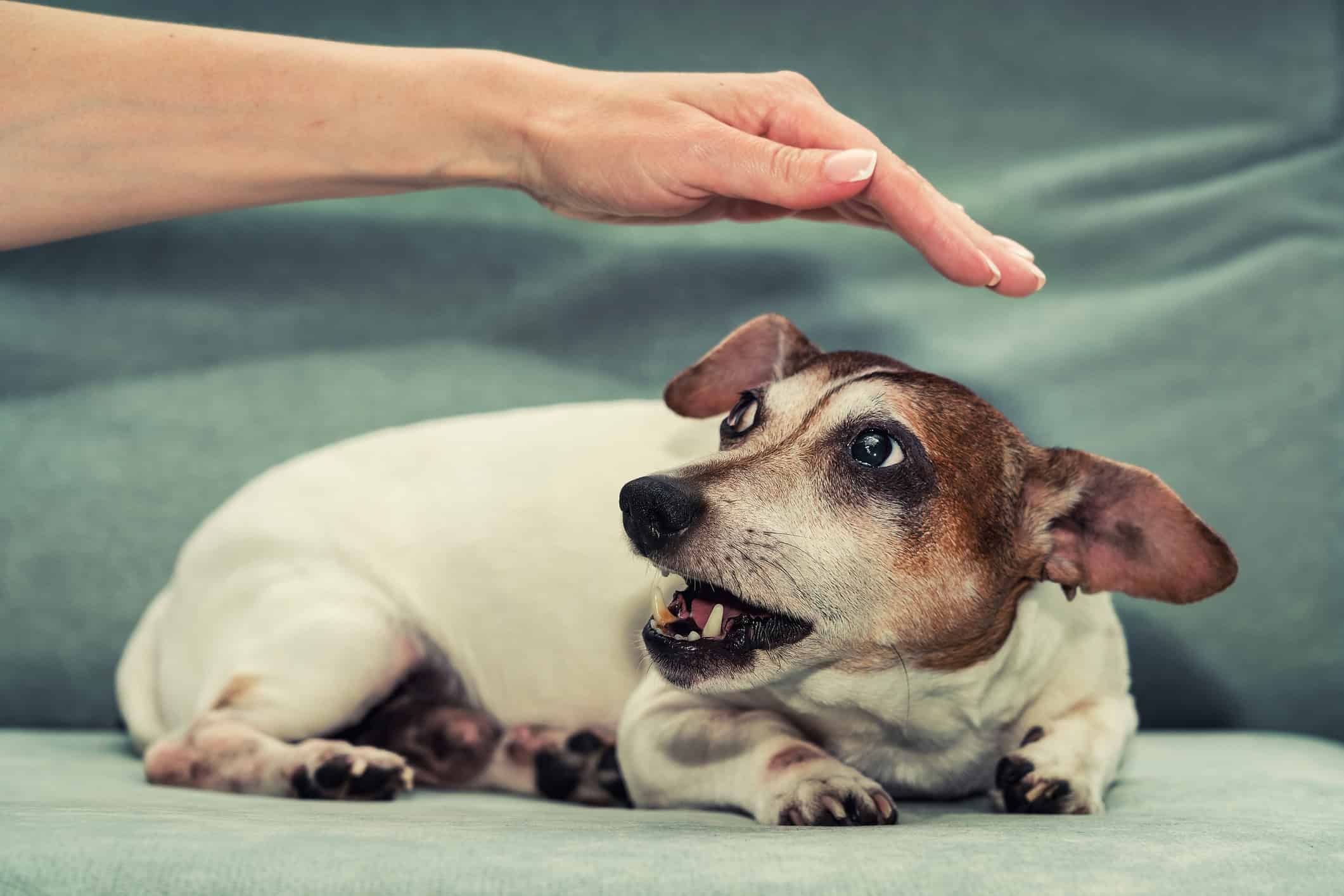
“My dog growls and bites without any reason.”
“He just popped me on the hand.”
“She just nipped me on the heel for no reason.”
All of these statements are common statements that I have heard over during my dog training career. I would like to take just a few minutes to explain that in 99 percent of dog bites, there is a reason, or what we like to refer to as a cause.
A note on idiopathic aggression
Firstly, I want to establish that there is a rare condition that is seen in dogs that causes them to be aggressive that doesn’t have a cause or trigger. This condition is known as idiopathic aggression. As I stated, this condition is very rare. In these cases, we recommend that the dog be examined by a veterinarian and be evaluated by an educated trainer that specializes in behavior analysis. Since euthanasia is the only option in these cases, we want to make absolutely sure that there are no medical or behavioral causes for aggression.
Now, let’s dive into what causes a dog to bite.
Reasons why dogs bite
Uncovering why a dog is biting is not a simple diagnosis. For us at Highland Canine, this process begins with an extensive interview with the dog’s owner and family. During this interview, we are going to ask the owner specific questions that will help us determine what the root cause of the problem is.
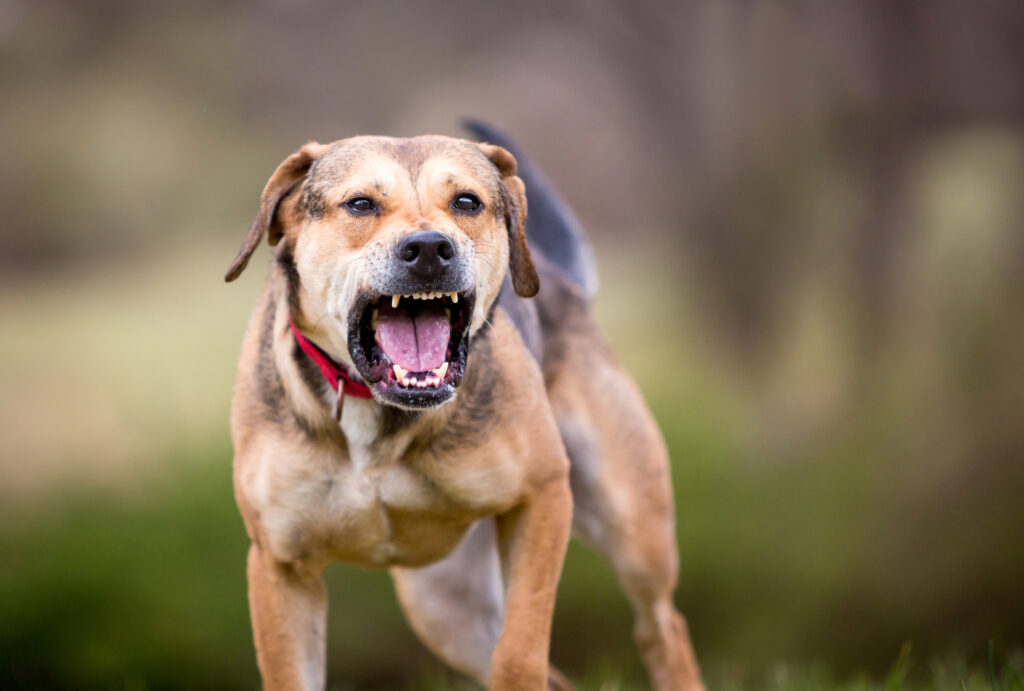
Then, we would need to observe the dog in its normal environment. While doing this, we would be watching for any signal that the dog may be displaying through its body language. Some things that we may see during the observation could be:
- A lip curl
- Growl
- Piloerection
- Tail tuck
- Tail flagged
- Paw raise
This list is not exhaustive – there are many other signs we are watching for. Each of these can and will give us a clue as to what the root cause may be.
We are also attempting to identify a trigger. A trigger could be a noise, a certain movement, a particular environment, and other things. It is essentially anything that triggers the dog’s aggression. What we are trying to establish is what makes the dog show aggression every time that it is exposed to a certain stimulus.
Types of aggression
There are several types of aggression that could be the cause of aggression. Some examples are:
- Fear
- Dominance
- Learned
- Territorial
- Maternal
- Possessive (resource guarding)
- Predatory
It is essential that we diagnose the root cause correctly before we begin any training plan. Misdiagnosing the root cause could result in a risk of injury to the dog, their human family, other animals, or other people. For example, the treatment for fear aggression is totally different than the treatment plan for dominance aggression
Testing theories to confirm diagnosis
Once we have determined the root cause and the trigger, then we can begin testing theories. During this process, we are placing the dog into different scenarios to confirm that we have diagnosed the issue correctly. Once we are confident that we are on the right path, we can begin formulating a plan to correct the behavior.
Once we have a plan, there are several steps that we need to remember to include.
- Safety. Establish a plan that is safe for the dog, the handler, anyone that may be involved with the dog (ex: family members).
- Execute the plan in a way that will modify the behavior in a positive way.
- Context. We want to change the context for the dog. Different handlers, environments, and situations.
- Educate the owners and establish a plan for them to maintain the training.
- Follow up! We always want to follow up with our clients and provide any additional instruction or assistance.
In conclusion
Dealing with aggressive dogs is a challenging process for all trainers. As trainers, it is often tempting to just treat the symptoms and not the root cause. By this, I mean just punish the lip curl or growl of a fearful dog. These are signals that the dog is displaying to warn us of a bite that is coming. If we punish these things, the dog will skip the warnings and simply go directly to the bite. Again, we must take the time to properly diagnose the problem.
In this article, I hope that I have explained that dogs don’t bite someone “out of nowhere.” After being in this industry for many years, I believe we need to educate our trainers and clients on what causes a dog to show aggression and bite. By doing so, we will be saving countless numbers of dogs from being unnecessarily euthanized.
Related posts
Meet Carlos Viera, Our Professional Dog Trainer Serving Huntersville, NC
Carlos Viera is Highland Canine Training’s professional dog trainer in Huntersville, NC. Learn more about Carlos in this Q&A.

How To Train A Deaf Dog
When working with a deaf dog, you will need a different approach to training. David Hamblin (professional dog trainer in Roanoke, VA) offer some tips.

Why Dogs May Plateau During Training
Has your dog’s training progress stalled? In this episode, we look at why training can plateau – and tips to resolve it.

You must be logged in to post a comment.