
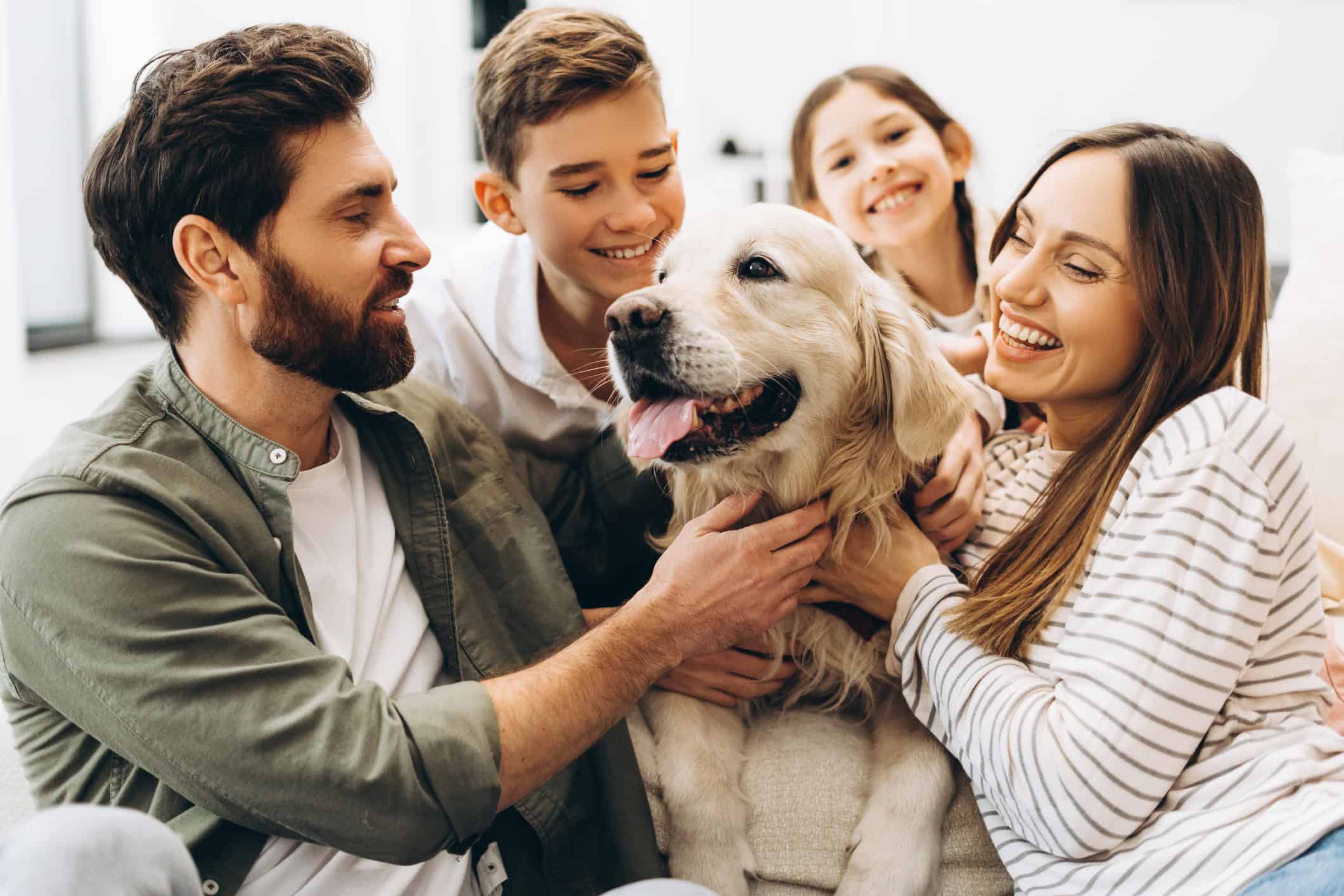
One of the most common questions professional dog trainers hear is, “Why does my dog listen to me but not my spouse?”. Or, perhaps one family member can walk the dog without any issues, while another struggles with pulling, jumping, or ignoring commands. At first glance, it can seem like dogs play favorites or deliberately choose who they want to listen to.
In reality, there is usually a much simpler explanation. Dogs are excellent observers. They constantly learn from the people around them, paying close attention to how each person communicates, what behaviors are rewarded, and the expectations that exist. If those expectations vary from one family member to another, it is perfectly normal for the dog to respond differently to each individual. A lack of consistency from one family member to another typically creates a situation where dogs behave differently when interacting with different people.
Dogs don't generalize as well as you may think
One of the biggest misconceptions in dog training is that once a dog learns a command, they automatically understand it in every situation and with every person. Dogs are not very good at generalizing – they are contextual learners. As an example, “sit” means the same thing to humans, regardless of who says it. To a dog, however, the picture may be much more specific. They may associate “sit” with one person’s voice, body language, reward history, and even the room where they first learned it. That is why a dog that responds perfectly to one family member may seem confused when someone else gives the exact same command.
Generalization is something that must be taught. Dogs need opportunities to practice their skills with different people, in different locations, and under different circumstances before they truly understand what is being asked.
Everyone communicates differently
Even within the same household, no two people communicate exactly alike. One person may give a command confidently and only once; another may repeat the cue several times before expecting a response. Someone else may unknowingly use different words altogether.
For example, one family member might say, “Sit.”, but another might say, “Come on. Sit. Sit down. Can you sit?”. Although the intention behind these instructions is the same, the dog is receiving very different information.
Body language also plays a significant role. Dogs naturally pay close attention to posture, movement, facial expressions, and tone of voice. Two people saying the same word can appear completely different from the dog’s perspective. Clear and consistent communication makes learning much easier.
Consistency creates reliability
Dogs thrive on consistency, and it is perhaps the most important trait you can introduce to the way your family interacts with your dog.
For example, if one family member allows the dog on the furniture while another does not, the dog is not being stubborn when they jump onto the couch. They are responding to two different sets of rules. The same applies to many everyday behaviors, including jumping on people, pulling on the leash, countersurfing, or barking for attention.
When household expectations change depending on who is present, dogs naturally struggle to understand what is expected. This inconsistency often leads owners to believe the dog is selectively listening, when in reality the dog is responding to the pattern they have learned with each individual person.
Reinforcement histories matter
Dogs are intelligent – they quickly learn which behaviors are successful with different people, and will test accordingly to be able to get what they want.
Perhaps your dog knows that barking at one family member usually results in attention, while another person ignores the behavior. Maybe one person always shares food from the dinner table, while another never does. Over time, dogs develop different reinforcement histories with different people. They learn which behaviors produce rewards and adjust accordingly.
From the dog’s perspective, this makes perfect sense. Behaviors that are consistently rewarded tend to become stronger, regardless of who is providing the reward.
Emotional relationships can influence behavior
The relationship a dog has with each family member can also influence how they behave. Some people naturally spend more time training, exercising, and interacting with the dog. Others may primarily participate in play or cuddling, while someone else handles feeding or grooming. None of these relationships are wrong, but they can create different expectations for the dog.
For example, a dog may become highly excited when one family member comes home because that person usually initiates games of fetch. Another family member may be associated with calm walks or structured training sessions. Dogs are incredibly good at recognizing patterns and adjusting their behavior based on previous experiences.
Children present unique challenges
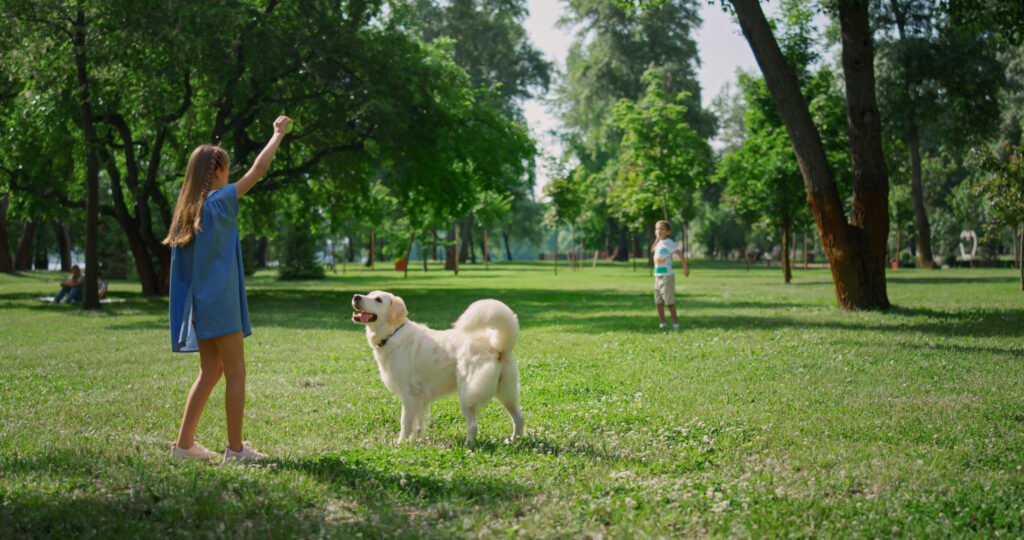
Many families notice that their dog responds differently to children than adults. This is often because children naturally communicate differently – and with far less consistency. Their voices are higher, their movements are quicker, and they may struggle to deliver cues consistently. Their behavior can also be more erratic and children tend to become excited more easily during interactions with dogs, making it difficult for the dog to distinguish between playtime and training.
This does not mean children cannot participate in training. Adult supervision is essential, and exercises should be kept simple, fun, and safe for everyone involved. In fact, involving children in age-appropriate training exercises can help strengthen both communication and the relationship between child and dog. This not only creates a valuable training opportunity for your pet, but also teaches your child the importance of safe and positive interactions with dogs.
Training should involve the whole family
One of the best ways to build consistency is to involve everyone in the dog’s training whenever possible. If only one person attends training classes or practices obedience exercises, the dog may become highly responsive to that individual while struggling to respond to others.
Instead, encourage multiple family members to practice basic obedience, leash walking, impulse control exercises, recall and place training on a regular basis. Even short training sessions with different people help the dog generalize their skills and understand that the same expectations apply regardless of who is handling them.
At Highland Canine Training, we always encourage all members of the household to attend group classes or be involved in private lessons to ensure that they are fully involved and invested in their dog’s training.
Building consistency at home
Fortunately, helping your dog respond equally well to everyone does not require starting from scratch.
Begin by making sure everyone in the household is using the same cues, rewarding the same behaviors, and maintaining the same household rules. If your dog is learning a new behavior, allow different family members to practice it once the dog understands the basics. Start in familiar environments before gradually increasing distractions and difficulty. Clicker training can also help to create consistency, as the sound remains the same no matter which member of the household is doing the training.
Most importantly, be patient. Just as dogs need time to learn new behaviors, they also need time to learn that those behaviors apply with every member of the family.
In conclusion
Dogs are constantly learning from the people around them. They notice differences in communication, routines, expectations, and reinforcement far more than many owners realize. When a dog responds differently to different family members, it is rarely because they are being stubborn or choosing favorites. More often, they are simply responding to the information they have been given.
By creating consistent expectations, involving the whole family in training, and practicing with different handlers, you can help your dog become more confident and reliable in every situation.
At Highland Canine Training, we encourage families to think of dog training as a team effort. When everyone communicates clearly and works toward the same goals, dogs learn faster, behave more consistently, and become better companions for every member of the household. If your family is struggling with consistency, reach out to one of our professional dog trainers today.
Related posts
Meet Carlos Viera, Our Professional Dog Trainer Serving Huntersville, NC
Carlos Viera is Highland Canine Training’s professional dog trainer in Huntersville, NC. Learn more about Carlos in this Q&A.

How To Train A Deaf Dog
When working with a deaf dog, you will need a different approach to training. David Hamblin (professional dog trainer in Roanoke, VA) offer some tips.

Why Dogs May Plateau During Training
Has your dog’s training progress stalled? In this episode, we look at why training can plateau – and tips to resolve it.

You must be logged in to post a comment.