
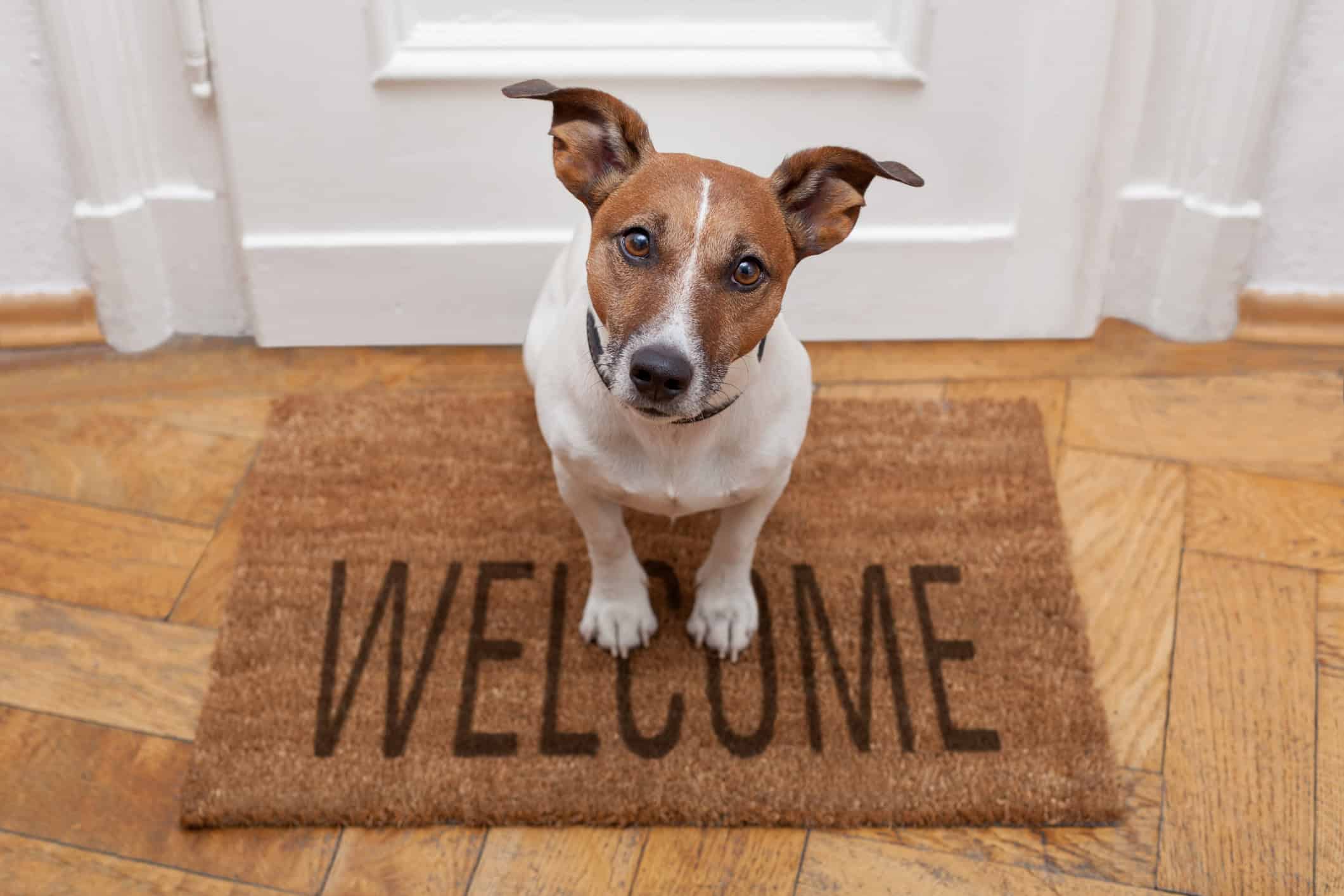
For many dogs, unfamiliar people entering their space can be stressful or overwhelming. While some dogs greet visitors enthusiastically, others may bark, jump, avoid interaction, or react defensively. These responses are not uncommon, especially when dogs feel uncertain about who is entering their home or approaching them unexpectedly.
Unfortunately, many dog owners unintentionally make these situations more difficult by forcing interactions too quickly. A dog that is uncomfortable around strangers does not automatically become more confident simply because it is repeatedly pushed into uncomfortable situations. In many cases, this actually creates additional stress and increases the likelihood of problem behaviors developing over time.
Introducing your dog to neighbors and visitors safely starts with understanding your dog’s comfort level, controlling the environment, and allowing interactions to happen in a calm and structured way.
Why dogs react differently to visitors
Dogs are individuals. Their reactions to unfamiliar people are shaped by a number of factors, including (but not limited to) genetics, past experiences, socialization history, and temperament. Some dogs naturally recover quickly from new situations, while others are more cautious or sensitive.
For many dogs, visitors entering the home create a combination of excitement, territorial behavior, uncertainty, and overstimulation all at once. Even friendly dogs can struggle with impulse control when someone unexpected arrives at the door.
Other dogs may bark, retreat, or become tense because they are unsure how to handle the interaction. In these situations, the behavior is often rooted in stress or conflict rather than aggression.
Understanding this distinction is important. A dog that is uncomfortable around strangers is not necessarily being “dominant” or intentionally difficult. Often, the dog simply lacks the skills or confidence to navigate the situation appropriately.
Avoid forcing interactions
One of the biggest mistakes dog owners make is encouraging or even forcing visitors to immediately approach, pet, or engage with the dog. Many dog owners assume that exposure alone builds confidence, but forced interaction can have the opposite effect of what is intended. Dogs that feel trapped or pressured are more likely to escalate their behavior (especially if they do not have space to disengage).
Instead of forcing greetings, take a more structured approach. Allow the dog to observe the visitor at a comfortable distance first. This gives the dog time to process the situation without feeling overwhelmed.
In many cases, the safest and calmest introductions happen when the visitor initially ignores the dog entirely. Direct eye contact, reaching toward the dog, or excessive excitement can increase pressure and make nervous dogs more uncomfortable.
Control the environment before the visitor arrives
Successful introductions often begin before the doorbell rings. If your dog becomes highly aroused when someone arrives, it helps to have a clear plan in place ahead of time. This may involve placing the dog on a leash, or using a crate or separate room. The goal is not to suppress the dog completely, but to prevent the situation from becoming emotionally overwhelming before the interaction even begins.
Dogs tend to make poorer decisions when arousal levels spike quickly. Creating structure during arrivals helps keep the dog in a state where they can still respond to guidance and process information clearly.
Watch your dog’s body language
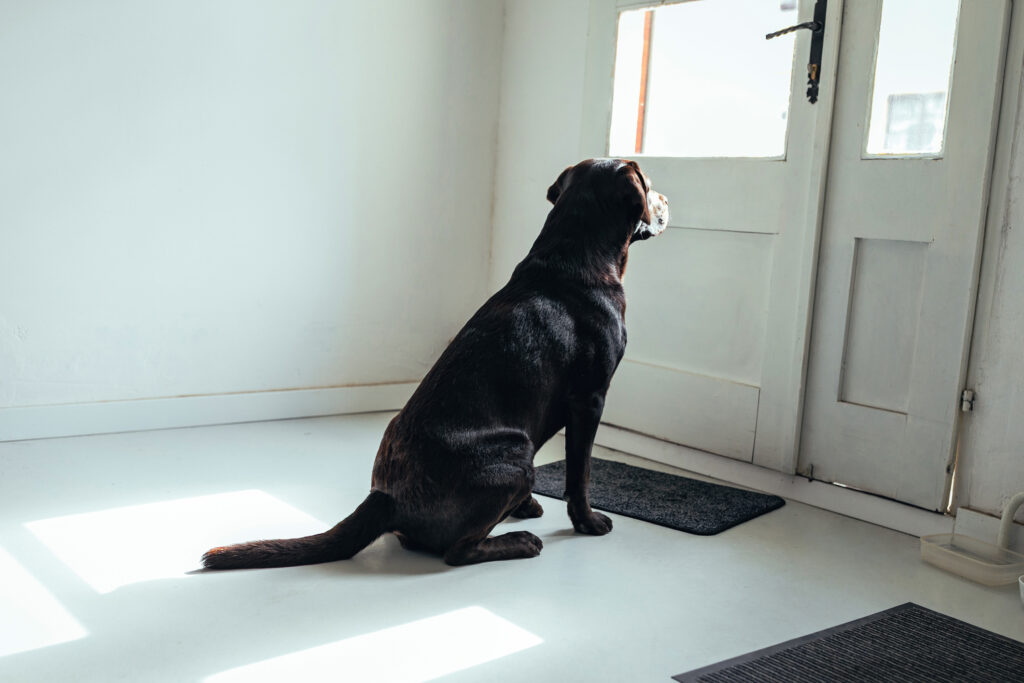
Safe introductions depend heavily on reading canine body language. Some signs that a dog may be stressed or uncomfortable include:
- Stiff posture
- Hard staring
- Tucked tail
- Lip licking
- Yawning
- Pacing
- Avoiding interaction
- Excessive barking
Many dogs show subtle signs of stress long before they escalate into larger reactions. Learning to recognize these signals allows owners to intervene early rather than waiting for the dog to become overwhelmed.
It is also important to understand that a wagging tail does not always mean a dog is relaxed or friendly. Context and overall body posture matter far more than tail movement alone. Dogs communicate through posture, movement, facial expression, and spatial behavior. If you are unsure about your dog’s body language, having a professional dog trainer present can be helpful.
Let the dog approach at their own pace
Once the dog has had an opportunity to settle and observe the visitor calmly, the interaction should happen on the dog’s terms whenever possible. This means allowing the dog to choose whether to approach rather than encouraging the visitor to move toward them.
Many dogs become more comfortable when they are given the freedom to investigate without pressure. Calm, neutral behavior from the visitor is often more effective than enthusiastic attempts to ‘make friends’.
For dogs that are particularly nervous, the first successful interaction may simply involve existing calmly in the same room without direct engagement. That is perfectly acceptable progress.
Avoid reinforcing overexcitement
Not all problematic greetings come from fear. Some dogs become excessively excited when people arrive and struggle to regulate themselves. Jumping, frantic behavior, vocalizing, and loss of impulse control are common in these situations. While this behavior may seem harmless, it can become unsafe quickly, especially around children, elderly neighbors, or unfamiliar visitors.
Teaching calm behaviors before greeting people is extremely important. Exercises such as the Place command, duration stays, and impulse control work can help dogs learn that calm behavior, not chaos, leads to social interaction. The greeting itself should never become the reward for losing control.
Advocate for your dog
Dog owners sometimes feel pressured to allow interactions their dog is not ready for because visitors insist that they are “good with dogs” or want to help socialize the dog. And societal norms now seem to dictate that even if someone asks in advance, there is pressure on dog owners to make their dog available for petting.
Advocating for your dog means recognizing their limits and protecting them from situations that create unnecessary stress. Not every dog wants to interact with every person, and that is okay. A dog can still be stable and well-trained without enjoying constant social engagement. Safe introductions prioritize the dog’s emotional state, not the visitor’s expectations.
Some dogs need professional help
For dogs with significant fear, reactivity, or aggression concerns, visitor introductions can become genuinely dangerous if handled incorrectly. In these cases, professional training is strongly recommended. Behavior modification is a complex but effective process where a dog trainer implements a structured, methodical training plan to improve the dog’s reactions in these situations. If you need help, Highland Canine Training has professional dog trainers located across the United States.
In conclusion
Introducing your dog to neighbors and visitors safely is not about forcing friendliness or creating instant social behavior. It is about building trust, reducing pressure, and helping the dog learn how to navigate unfamiliar situations calmly.
Some dogs are naturally social. Others need more structure, more distance, and more time. The key is recognizing the individual dog in front of you and adjusting your approach accordingly.
At Highland Canine Training, we work with dogs across a wide range of behavioral challenges, including fear, reactivity, overexcitement, and visitor-related issues. With the right structure and guidance, many dogs can learn to handle social situations far more confidently and safely.
Related posts
Meet Carlos Viera, Our Professional Dog Trainer Serving Huntersville, NC
Carlos Viera is Highland Canine Training’s professional dog trainer in Huntersville, NC. Learn more about Carlos in this Q&A.

How To Train A Deaf Dog
When working with a deaf dog, you will need a different approach to training. David Hamblin (professional dog trainer in Roanoke, VA) offer some tips.

Why Dogs May Plateau During Training
Has your dog’s training progress stalled? In this episode, we look at why training can plateau – and tips to resolve it.

You must be logged in to post a comment.