
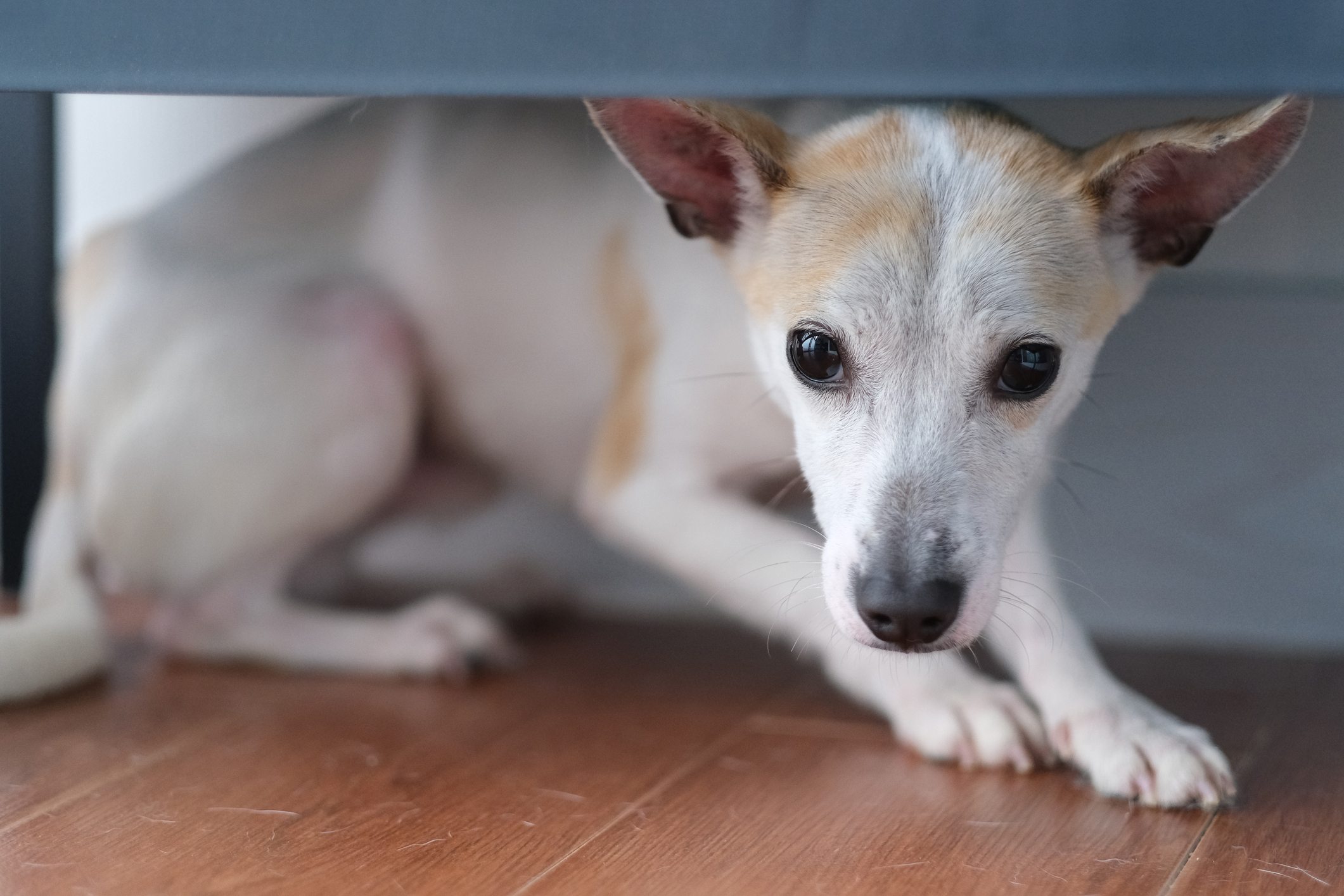
In my years of training dogs, I have encountered many dogs who deal with fear. Managing a dog’s fear can take a toll on your dog and family if it isn’t addressed quickly. Fear around specific objects can limit your dog’s ability to interact with the world, causing them to miss out on new experiences and hindering their quality of life.
If your dog is showing signs of fear around an object or objects, don’t ignore the issue. Fear can be very straightforward and simple to fix in method, but may take a little time.
Types of objects that can scare dogs
I’ve seen dogs scared of a variety of objects. Here are a few that come to mind:
- Trashcans
- Statues/lawn art
- Wet floor signs
- Umbrellas
- Mops/brooms
- Vacuums
- Plastic bags (especially when blowing in the wind)
- Objects that move quickly or unexpectedly
Fear of objects usually stems from lack of socialization in puppyhood, traumatic or sensitizing events, and in some cases a lack of confidence.
What does fear look like in dogs?
You might be wondering what fear of objects looks like in dogs. Fear manifests differently in every dog. Here are a few common indicators your dog is scared or uncomfortable around an object.
- Barking or growling at the object
- Low body posture
- Tucked tail
- Unwillingness to move toward the object
- Avoidance or hiding
- Shaking or frozen body position
It is obviously important to note that you should consider your dog’s body language cues as a whole to determine if it is a fear-based reaction. A combination of any or all of the above would indicate fear.

How to prevent fear of objects
The best way to prevent your dog developing a fear of objects is with plenty of confidence building and socialization. The ‘rule of sevens’ is a wonderful guide for socializing your puppy or dog. This concept suggests your puppy should experience seven different surfaces, people, sounds, objects, locations, challenges, and containers. This training creates a strong foundation for your dog.
How to treat dogs that are scared of specific objects
As a dog trainer, the first thing I do is determine exactly what the dog is afraid of and what their behavior looks like around the object. Today, we are going to use an umbrella as our example.
The next step is finding a high value reward that works for your dog. If your dog loves to play fetch, a toy might be your choice. If your dog is more motivated by food, I’d suggest something really exciting like beef liver or cheese. It is important that it is a high motivator – if you are using food, just using your dog’s regular kibble won’t be as effective here.
With the reward in hand, we are going to start the process of desensitization and counterconditioning. Our goal is to slowly reframe the way your dog responds to the umbrella by pairing it with a positive reward.
Initially, start with the umbrella on the floor in the middle of the room. Start from whatever distance your dog is comfortable, and slowly encourage your dog to move closer by tossing treats near the umbrella or luring them with the reward. If they are too uncomfortable to move towards the object or they are displaying any of the behaviors mentioned above, leave the umbrella out until they are comfortable. If they are willing to move closer to the object, make sure to encourage them with positive reinforcement.
Once they are comfortable taking the reward off of the object, you are ready to move on. This may happen quickly or it might take a few sessions for the dog to get comfortable taking food off of the object. Remember to keep sessions short and fun. We want the dog to respond positively around the umbrella.
Next, we’re going to do the same exercise, but with the umbrella open. Once the dog is comfortable with the umbrella open, we’re ready to move forward. Work with the umbrella in a human’s hand and continue rewarding calm behavior from your dog, encouraging them to get closer to the umbrella. Continue increasing the challenge for your dog by opening and closing the umbrella. Once they are comfortable with the movement and sound, try going for a walk with the umbrella at your side or open above your head. Make sure to reward the calm behavior.
In conclusion
Over time, you can change the way your dog reacts to an object, opening the world back up and improving their quality of life. There is no doubt that dealing with a fearful dog requires patience, time and commitment.
If you are struggling to help your dog overcome their fears, consider reaching out to a professional dog trainer who can help. A systematic approach can help to build your dog’s confidence and remove their fear of objects.
Related posts
Want To Take Your Dog To A Festival? Here Are The Dos and Don’ts
In this article, Shae Slabaugh (professional dog trainer based in Huntsville, AL) explains how to prepare to take your dog to a festival.
Meet Carlos Viera, Our Professional Dog Trainer Serving Huntersville, NC
Carlos Viera is Highland Canine Training’s professional dog trainer in Huntersville, NC. Learn more about Carlos in this Q&A.

How To Train A Deaf Dog
When working with a deaf dog, you will need a different approach to training. David Hamblin (professional dog trainer in Roanoke, VA) offer some tips.

You must be logged in to post a comment.