

Over the years, dogs have become very popular to bring into homes and live as a companion animal alongside humans. Most people choose to own a dog for comfort, companionship, and to help them make healthy choices like getting out to exercise more. Most people love their canine companions and want the best for them. People want to give their canine companions freedom, love, and support – and in return, our dogs offer us all the love and companionship we desire.
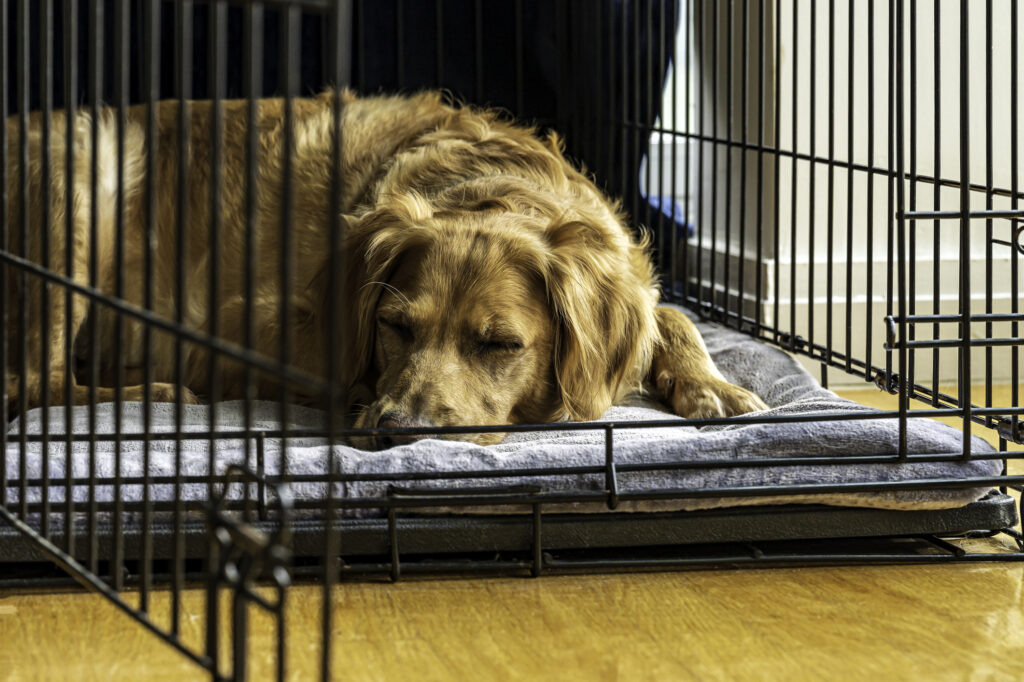
People often love their furry friend so much they don’t want to see them in a crate. This oftentime hurts the person more than it hurts the dog. Crates in a home should be used for so many reasons. Many humans actually don’t agree that crates are a great tool to use for dogs. There are several dogs that often build stress while in the crate and tend to whine, bark, drool, and even try escaping!
Owners tend to give up and believe that their dogs just don’t like the crate. Dogs can have a hard time being away from their human friend, and humans can have a hard time being away from them. But dogs that escape the crate can be quite problematic, so let’s talk about crates and why some dogs try to escape them.
Separation anxiety
This is a form of stress that often happens when a bond between the human and the dog has been developed and the dog desires to be with its human. It is true dogs can – and do – attach themselves to their person. You can recognize separation anxiety by listening and watching your dog’s behaviors. Whining, barking, drooling, panting, scratching and chewing are all great signs to recognize when diagnosing separation anxiety. How does your dog behave when placed in a crate? How would you help this behavior? How do you behave when your pet displays any of these behaviors?
Crate training
Sometimes dogs that come from a shelter environment or have been rehomed have never been introduced to a crate. Alternatively, people that have owned puppies for a lengthy time used a crate for the first few months, but never again afterwards. A lack of proper training can lead to poor crate manners and behaviors.
No exercise or mental stimulation
When dogs do not have proper training or exercise daily, they build energy and tend to act out. This can cause some severe issues when being crated. Dogs need to have structured training sessions, daily walks, and some running. It is in their genetics to keep moving. We have to teach them how we would like them to behave in our homes.
Fear or past trauma
So many dogs have actually had a poor experience in crates. I knew a dog that was beaten in her crate with no escape. This can really be troublesome and can require lots of work to make the dog feel comfortable again. Dogs can develop fear with crates. Once again, being able to read the behaviors of the dogs is very important.
Boredom
Without proper exercise and mental stimulation there can be consequences. Those can cause separation anxiety, and of course you could end up back to square one. Often, something as simple as a toy or something to chew on while they are in a crate can help to solve the boredom. Other times, we just need to help teach the dog how to settle in the crate. Proper stimulation and training can help reduce boredom.
Learned behavior
Dogs will misbehave with the thing that works for them. We have to remember that your dog’s first language is not English. Instead, your dog’s first language is non-verbal cues that we humans can’t always pick up on. When dogs learn what works for them, they will continue to do it, over and over again. The amount of time it takes to correct a bad behavior can be 10 times over. The amount of times it takes for a dog to learn they can get away with something – just once! The most stubborn dogs will pick up on things quickly.
In conclusion
Crates are not a ‘bad tool’, and dogs who struggle in crates are not ‘bad dogs’ – we simply need to understand which of the dogs needs are unmet. How are we confusing the dog, or what is this dog’s past experience? As owners and trainers, we have to take the time to learn, be patient, understanding, be consistent, and help the dog feel safe and comfortable in their space. We can work together to make this happen.
If you are struggling with crate training your dog, or if your dog is constantly trying to break out of their crate, please reach out to our team of professional dog trainers here at Highland Canine Training.
Related posts

Want To Take Your Dog To A Festival? Here Are The Dos and Don’ts
In this article, Shae Slabaugh (professional dog trainer based in Huntsville, AL) explains how to prepare to take your dog to a festival.

Meet Carlos Viera, Our Professional Dog Trainer Serving Huntersville, NC
Carlos Viera is Highland Canine Training’s professional dog trainer in Huntersville, NC. Learn more about Carlos in this Q&A.

How To Train A Deaf Dog
When working with a deaf dog, you will need a different approach to training. David Hamblin (professional dog trainer in Roanoke, VA) offer some tips.

You must be logged in to post a comment.