
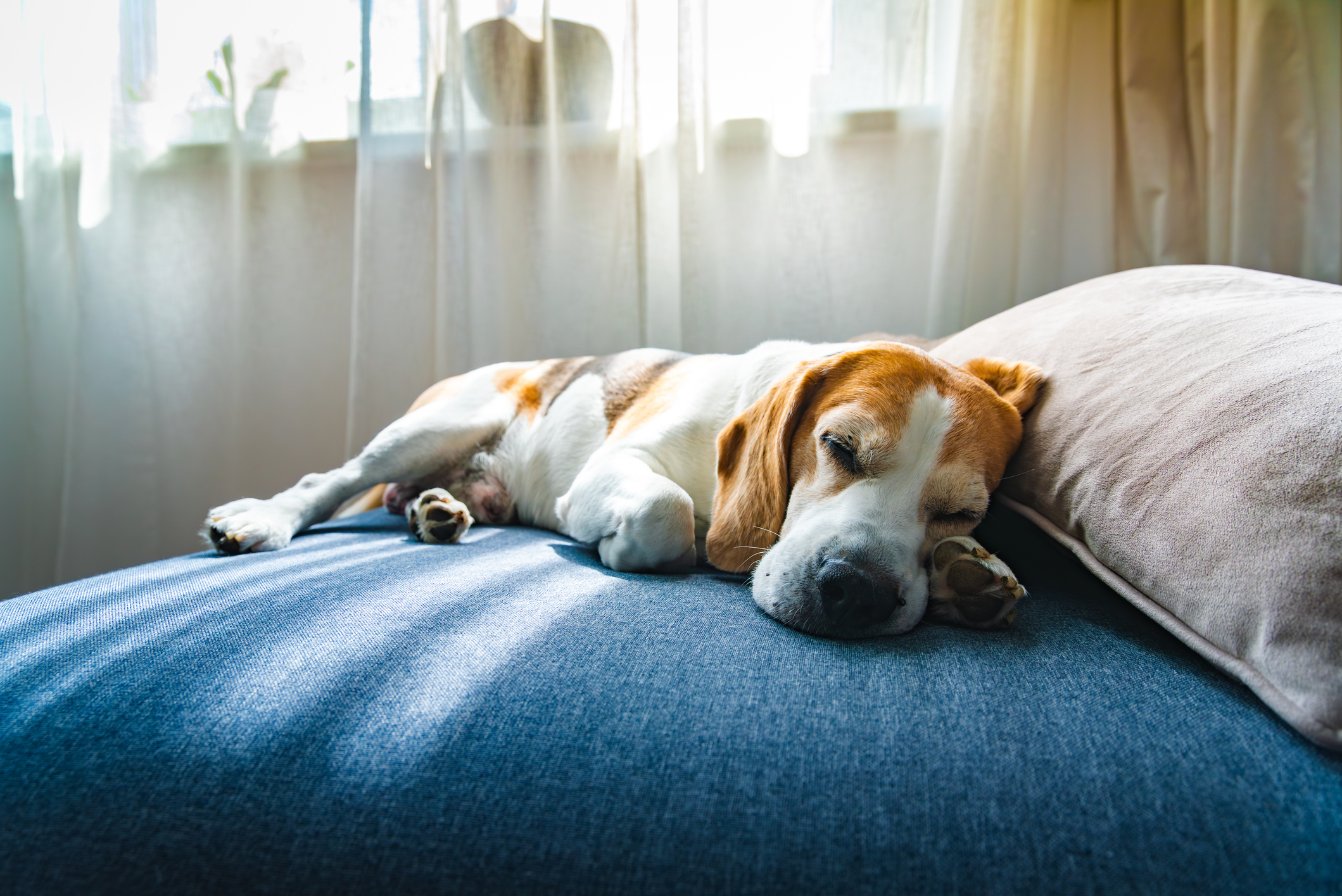
One of the most common questions dog owners ask is where their dog should sleep at night. Should they sleep in a crate? On a dog bed? In the owner’s bedroom? On the owner’s bed?
The answer is not always straightforward. Unfortunately, discussions about where dogs should sleep often become emotional. Some people believe dogs should always sleep in a crate, while others feel that dogs should have unrestricted access to furniture and bedrooms. In reality, successful dog ownership is less about following a universal rule, and more about choosing a sleeping arrangement that supports the dog’s behavior, safety, and overall well-being.
While there is no single sleeping arrangement that works for every dog, there are advantages and disadvantages to each option. Factors such as the dog’s age, training level, temperament, and household rules all play a role in determining what is most appropriate. In this article, we’ll review some of the sleeping options and weigh up how those factors should influence your decision.
Sleeping in a crate
For many dogs, especially puppies, a crate can be one of the safest and most effective sleeping locations When introduced properly, crates provide a secure, predictable space where dogs can relax and rest without distractions. Many dogs naturally seek out enclosed spaces because they feel protected and comfortable there.
For puppies, crates also play an important role in house training. Because most dogs naturally avoid eliminating in their sleeping area, crates can help establish good bathroom habits and reduce the likelihood of accidents overnight. Crates can also prevent destructive behavior during the night. Puppies and adolescent dogs often explore when unsupervised, and giving them free access to the home before they are ready can result in chewed furniture, damaged belongings, or unsafe situations.
However, crates are not a magic solution. Dogs should never spend excessive amounts of time confined, and crate training must be introduced gradually and positively. A dog that has not been properly conditioned to a crate may experience stress or frustration when confined.
For many young dogs and newly adopted dogs, though, a crate provides valuable structure and management during the training process.
Sleeping in a dog bed
Many owners prefer having their dog sleep on a dog bed somewhere in the home. This option provides the dog with a designated resting area while still allowing them some freedom of movement. For dogs that are house trained, reliable, and capable of settling calmly overnight, a dog bed can work extremely well. Having a dedicated sleeping location can also reinforce boundaries and routine. Dogs benefit from consistency, and knowing where they are expected to settle each night often helps create predictability.
The challenge comes when owners give dogs more freedom than they are ready for. A young puppy or poorly supervised adolescent dog may leave the bed, explore the house, or engage in unwanted behaviors during the night. Before allowing unrestricted access to the home overnight, owners should be confident that their dog has demonstrated reliability, appropriate house manners, and the ability to settle independently.
Sleeping in the owner's bedroom
Many dog owners choose to have their dog sleep in the bedroom, either on a dog bed or in a crate. There are several advantages to this arrangement. Dogs are social animals and often feel more comfortable being close to their owners. For puppies, sleeping in the bedroom can make the transition into a new home less stressful. Owners can also hear when a puppy needs a nighttime bathroom break, which can help accelerate house training.
For adult dogs, proximity to their owners can provide comfort and security. Some dogs simply rest better when they know their family is nearby.
However, owners should be mindful of whether the arrangement is encouraging healthy independence. Some dogs become overly reliant on constant access to their owners and may struggle when left alone during the day. A restless dog can also impact the quality of sleep for the people sleeping in the room. The key is ensuring that sleeping in the bedroom complements training goals rather than undermining them.

Sleeping on the owner's bed
Perhaps no sleeping arrangement generates more debate than allowing a dog to sleep on the owner’s bed. Contrary to some outdated beliefs, allowing a dog on the bed does not automatically cause dominance issues or behavioral problems. Many well-trained dogs sleep on their owner’s bed without any negative consequences, and for some owners, sharing a bed with their dog strengthens the bond they have with their pet and provides companionship. Many dogs enjoy the comfort and closeness that comes with sleeping alongside their owners.
That said, sleeping on the bed is not the right choice for every dog. Some dogs become possessive of sleeping spaces and may guard the bed from other people or animals. Others become overly dependent on constant physical contact and struggle when separated from their owners. Dogs that have not learned boundaries elsewhere in the home may also begin testing limits if unrestricted access to furniture is introduced too early.
There are practical considerations as well. Large dogs can significantly reduce sleeping space, disrupt sleep, and contribute to increased wear and tear on bedding and furniture.
Ultimately, allowing a dog on the bed is a personal decision, but it should be based on the dog’s behavior and training level rather than simply emotion.
Factors to consider
When deciding where your dog should sleep, several factors are worth considering.
Age
Young puppies generally benefit from more structure and supervision. Crates are often the safest option until house training and household manners are well established.
Reliability
Dogs that have demonstrated reliable behavior throughout the home can typically be trusted with more freedom. Dogs that still engage in destructive behavior or have accidents overnight may need additional management.
Behavior issues
Dogs dealing with separation anxiety, resource guarding, reactivity, or other behavioral challenges may require specific sleeping arrangements that support their training plan.
Household preferences
Every family has different expectations regarding pets in bedrooms and on furniture. Consistency is more important than the specific rule itself. Whatever boundaries you establish should be maintained consistently.
There is no universal correct answer
One of the biggest mistakes that dog owners make is assuming there is a correct sleeping arrangement for every dog. Just as with most situations in pet ownership, the reality is more nuanced and depends on the specific circumstances for your dog, your family, and your home.
A young puppy may benefit greatly from sleeping in a crate, while a mature, well-trained adult dog may do perfectly well sleeping on a bed in the owner’s room. Similarly, one dog may enjoy sleeping independently in another room, while another may be more comfortable closer to the family. The best sleeping arrangement is the one that supports both the dog’s needs and the owner’s goals.
In conclusion
Where your dog sleeps is ultimately a management and lifestyle decision. There is no single answer that works for every dog, household, or situation.
The most important consideration is whether the sleeping arrangement promotes safety, good behavior, and healthy habits. Dogs should be given freedom that matches their level of training and reliability, rather than freedom they have not yet earned.
Whether your dog sleeps in a crate, on a dog bed, in your bedroom, or even on your bed, consistency and structure remain the keys to success. A well-trained dog can thrive in a variety of sleeping arrangements, provided those arrangements are chosen thoughtfully and support the dog’s long-term development.
Related posts

Want To Take Your Dog To A Festival? Here Are The Dos and Don’ts
In this article, Shae Slabaugh (professional dog trainer based in Huntsville, AL) explains how to prepare to take your dog to a festival.

Meet Carlos Viera, Our Professional Dog Trainer Serving Huntersville, NC
Carlos Viera is Highland Canine Training’s professional dog trainer in Huntersville, NC. Learn more about Carlos in this Q&A.

How To Train A Deaf Dog
When working with a deaf dog, you will need a different approach to training. David Hamblin (professional dog trainer in Roanoke, VA) offer some tips.

You must be logged in to post a comment.