
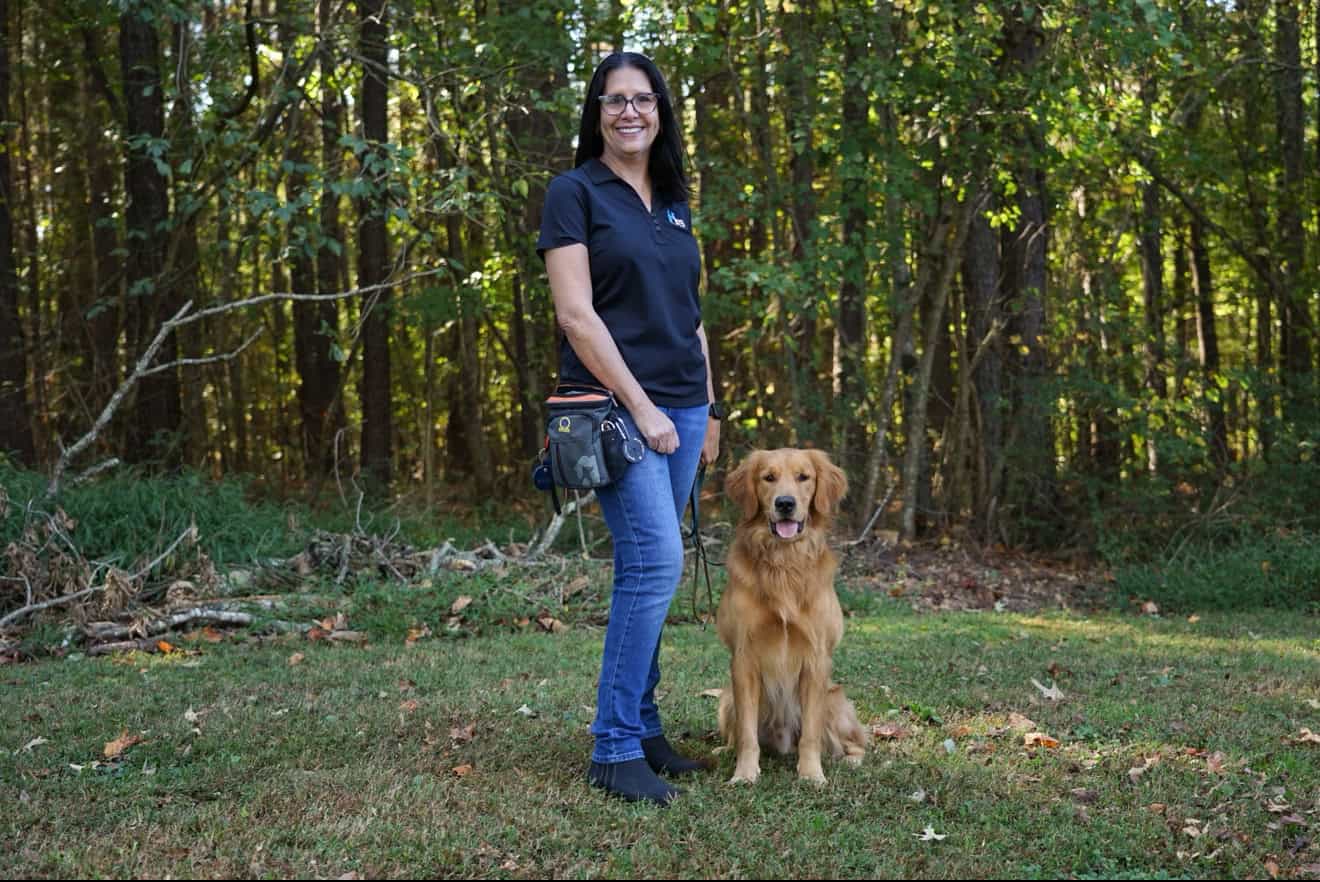
Although Highland Canine Training has a team of professional dog trainers located across the United States, we have always had a special affinity for our home state of North Carolina. As of writing, we have seven dog training locations in the Tarheel State, in addition to our state-of-the-art training center in Harmony.
We finished 2025 by asking some of our trainers for one thing they had learned over the past twelve months. One of the trainers featured in that article was Marlene Ruiz – the latest addition to our team, serving dog owners in the Charlotte Metro area alongside Kress Walters.
So that our readers can learn more about Marlene and her background in dog training, we caught up with her for a Q&A! To learn more about our dog training services in Charlotte, visit our dedicated location page, call Marlene on (704) 951-7882, or email marleneruiz@highlandcanine.com.
Marlene, can you explain your history and background with dogs when you were growing up?
When I was about four years old, I was chased by a dog in my neighborhood in New Jersey. Looking back now, I can see that the dog likely just wanted to play, but at the time the experience left me genuinely afraid of dogs. A few years later, after my family moved to Miami, my father brought home a German Shepherd puppy in the hope that she would help me overcome that fear—and she did exactly that.
She quickly became my best friend, and I became deeply invested in making sure she was well-behaved and well-mannered. Building that relationship completely changed my perspective and confidence around dogs. From that point on, my fear was replaced with a growing sense of respect, trust, and appreciation. Over the years, our family welcomed two more German Shepherds, and my connection to dogs only continued to deepen from there, shaping the foundation for the path I would later pursue professionally.
What motivated you to get into dog training?
I’ve always had dogs in my life, and they were consistently well-behaved, reliable companions. Because of that, friends, family members, and even neighbors often asked if I could help with their dogs. I’d offer guidance, demonstrate techniques, or teach a specific skill here and there, never imagining at the time that those small moments were laying the groundwork for a future career.
Everything changed later in life when I was diagnosed with Lupus and Rheumatoid Arthritis. During that time, I began teaching my then two-year-old Standard Schnauzer, Pepper, how to assist me in practical ways—picking items up off the floor when I dropped them and retrieving my inhaler when I needed it. What stood out to me wasn’t just how capable she was, but why she was able to learn those tasks so easily. The foundation I had built during her puppyhood—structure, clarity, engagement, and obedience—made all the difference.
That experience was a turning point. It showed me how powerful proper foundational training can be, not just for service work, but for everyday life. I realized I wanted to help other dog owners build that same foundation with their dogs—teaching principles that prevent behavior problems before they start and set dogs up for long-term success as they mature. That realization is what ultimately motivated me to pursue dog training professionally.
Could you explain your overall dog training philosophy?
When I began my career, I believed positive reinforcement was the only effective way to train dogs. As I gained more experience working with complex behavioral issues such as resource guarding, human reactivity, and predatory behaviors like car chasing, I came to understand that positive reinforcement alone has limitations. While it remains my first line of approach, I adapt my training methods to meet the individual needs of each dog and their owner. Every dog learns differently, and responsible training requires flexibility, thoughtful assessment, and the use of methods that are both humane and effective for the specific situation.
In your bio, you mentioned that you were a trainer with the Magic City K9 prison program. Could you talk a little about your work as part of this program, and the benefits for both the people and dogs involved?
Magic City K9 partners with correctional facilities to provide the Miami and greater Florida community with well-trained, adoptable dogs. The dogs selected for the program come from shelters throughout South Florida and live full-time inside the correctional facility with their assigned inmate trainers and handlers. Most often, these dogs are large bully breeds—typically over 50 pounds—that have spent extended periods in shelters with little to no adoption interest, but a variety of purebred dogs have also benefited from the program.
My role with Magic City K9 involved visiting the facility weekly to support the inmate trainers and handlers by refining their training skills, offering guidance, and helping troubleshoot challenges. The inmates selected for the program are chosen by the institution based on exemplary behavior and commitment to their own rehabilitation. Some participants have been part of the program for years and have developed a high level of skill—many could easily be considered experienced trainers. Others enter the program with no prior experience handling a dog but bring a strong willingness to learn and grow.
The primary goal of the program is to produce well-mannered, stable family dogs ready for successful adoption. In some cases, certain dogs demonstrate the temperament and aptitude needed for service dog work and go on to fill those roles. Beyond the training itself, the most meaningful outcome of the program is the second chance it provides— both for the dogs and the people involved. The dogs are given structure, purpose, and the opportunity to thrive, while the inmates gain responsibility, valuable skills, and a renewed sense of purpose as they prepare to re-enter society. Ultimately, the program is about rehabilitation, accountability, and positive transformation—for both the inmates and the dogs.
Our readers may not be aware that dog training is an unregulated industry - meaning anyone can become a dog trainer without a license or education. For you, what is the importance of education (and ongoing education) as a dog trainer?
Like any specialized profession, education is the cornerstone of maintaining high standards, ethical practices, and accountability. For me, this is especially critical because I am being entrusted with the care, safety, and development of a family member who is deeply loved and emotionally significant. The decisions I make can have long-term consequences for both the dog and the people who live with them.
Dog training continues to evolve as new research, case studies, and real-world applications emerge. Staying current allows me to refine my skills, challenge my own assumptions, and avoid relying on outdated or one-size-fits-all approaches. It also helps me to ensure that the methods I am using are both effective and appropriate for the individual dog in front of me.
You sit on the IACP's board, as Director overseeing legislative affairs in the dog training world. What does this role entail and how does your role (and the IACP's influence) help to shape dog training legislation? Why should this matter to dog owners?
I’ve been a part of the IACP Legislative Committee for the past 4 years. Both as the Chair of the committee and as the Director of Oversight. The committee’s role is to promote the official positions of the IACP and intervene in legislation that is not in alignment with those positions which is including, but not limited to, restricting tools and trainer methodologies, dog trainer regulation or breed specific legislation. We also support those pieces of legislation that help promote and advance canine professionals worldwide. The Legislative Committee is a “all hands-on deck” type of committee in which every member takes on the responsibility of researching, tracking, responding to various pieces of legislation.
The work of the Legislative Committee has a direct and meaningful impact on everyday dog owners, even when the legislation appears to target professionals. For instance, when legislation seeks to restrict or ban training tools or specific methodologies, dog owners lose access to legitimate, effective options that may be appropriate for their individual dog. When access to qualified trainers is reduced, dog owners may struggle to get help with common but serious issues like aggression, reactivity, or anxiety— problems that, left unaddressed, can lead to surrender or euthanasia. Lastly, most dog owners don’t have the time, resources, or access to track legislation or speak directly with lawmakers. The Legislative Committee serves as a knowledgeable advocate— ensuring laws are shaped with real-world consequences in mind, not just ideology or special-interest pressure.
Which dog training programs do you offer to dog owners in Charlotte?
My primary focus is in-home private lesson training. Working with dogs in their home environment allows me to observe behavior where it naturally occurs, rather than in an artificial setting. Many unwanted behaviors are created, reinforced, or maintained by a dog’s daily environment, routines, and interactions. By training in the home, I can identify those contributing factors and make practical adjustments—often resolving issues more efficiently and with longer-lasting results. This approach also allows me to tailor training plans to the specific needs of both the dog and the household, rather than relying on a one-size-fits-all program.
In addition to private lessons, I offer community-based group classes. These classes are designed to help dogs develop reliability and confidence in real-world settings filled with distractions. In today’s society, dogs are often expected to accompany their owners to stores, restaurants, airplanes, events, and other public spaces. Learning how to remain calm, focused, and well-mannered in these environments is essential for a dog’s mental and emotional well-being. Training in these challenging, real-life situations helps dogs build resilience and teaches owners how to maintain structure, communication, and accountability outside the home.
What can dog owners expect when working with you?
When working with me, dog owners can expect an honest and individualized approach to training. I don’t believe in one-size-fits-all programs. Every dog, family, and lifestyle is different, and training plans should reflect that. I take the time to understand the dog in front of me, the household environment, and the goals of the owner before recommending any course of action.
Owners can also expect clear communication and practical guidance. I focus not only on teaching dogs, but on coaching owners so they understand why certain behaviors are happening and how to address them confidently and consistently. Training is a partnership, and success depends on everyone being involved and committed to the process.
My approach is balanced, humane, and grounded in both education and real-world experience. I prioritize clarity, structure, and fairness for the dog while remaining flexible enough to adjust methods as needed. Clients should expect accountability, support, and realistic expectations—not quick fixes, but lasting results that improve the dog’s behavior, confidence, and overall quality of life within the family.
Please feel free to include or mention anything else that you think would be of interest!
I am fully bilingual English/Spanish. Since Miami is such a multi-cultural city, I’ve trained dogs in several languages including German, Portuguese (Brazil and Portugal) and French.
Related posts
How To Train High-Drive Dogs (And Should You Get One?)
Successfully training high-drive dogs requires focus, engagement and attention during the training process.
The Hardest Kind Of Love: Saying Goodbye To Pepper
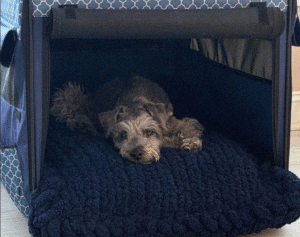
In this article, Marlene Ruiz discusses the difficulty of decisions surrounding humane euthanasia, while reflecting on the recent loss of her Schnauzer, Pepper.

How To Train Impulse Control
In this article, Megan Gerber (professional dog trainer serving Atlanta, GA) explains how you can teach impulse control to your dog.

You must be logged in to post a comment.