

On February 13, 2026, I made the hardest decision a dog owner can ever make. I chose to humanely euthanize my 12-year-old Schnauzer, Pepper.
Even writing those words still feels heavy.
Pepper had been quite ill for some time. What made it so difficult was that there was no clear medical explanation for what was happening to her. We wanted to know something, to find something we could treat, something we could fight. But the answers never came. If anything, what I had witnessed was the slow fading of a dog whose passing was the one that I had known better than anyone.
Anyone who has lived with a dog for years can observe the small details that define them — the spark in their eyes, the manner they greet you at the door, the minute habits that make them uniquely themselves.
That spark started to dim gradually. Pepper was still physically there, but she was becoming a shell of the dog I had known and loved for twelve years.
Every dog owner is familiar with the hope that resides in us at moments like these. When we want to believe tomorrow could be better. Perhaps this is just a setback. Maybe they will rally and come back to us tomorrow.
But there’s also a moment when love demands something that might be incredibly difficult. As a dog trainer, I’ve advised many clients on quality-of-life decisions, but this was not like any other, this was MY dog.
I was forced to confront this pain as I watched Pepper struggle. The life she was living had begun to differ from the one she had once enjoyed. The dog who once roamed the world with curiosity and personality was barely enduring each day.
Opting for humane euthanasia wasn’t about giving up. It was about avoiding suffering.
Dogs trust us in every aspect of their lives. They depend not just on us for food, training, and guidance, but for the decisions they cannot make for themselves. After their quality of life has been compromised, it is our job to protect them from prolonged suffering.
And that responsibility can feel unbearably heavy.
Recognizing when quality of life has changed
One of the hardest questions dog owners must grapple with is “How do I know it’s time?”
There is seldom a single moment or obvious symptom to look out for. Instead, it often comes from noticing gradual changes that tell us our dog is no longer experiencing life the way they once did.
Some of the signs that many owners will observe:
- Loss of appetite or refusal to eat
- Persistent pain or discomfort
- Withdrawal from family interaction
- Loss of mobility or the ability to move comfortably
- Inability to rest peacefully
- A noticeable loss of interest in things they once loved
For many dogs, food is one of the most fundamental pleasures of life. When Pepper stopped eating altogether, this was one of the clearest signals that something had fundamentally changed.
While I desired more time with her, I also knew that keeping her here while she struggled was not fair to her.
The weight of the decision
After euthanasia, many dog owners experience a unique kind of grief. Unlike other losses, we were the ones forced to make the decision.
Such responsibility can make people question themselves.
Did I wait too long?
Did I act too soon?
Could I have done something differently?
All of these thoughts are very common. They come from our love and bond with dogs.
But the truth is this: choosing a peaceful passing for a dog who is suffering is not a failure. It is one of the final acts of compassion we can give them.
We absorb the pain, so they don’t have to.
About Pepper
Pepper was with me for twelve years. In that time, she became far more than just a pet. She was part of my daily rhythm, part of my home, and part of my heart.
Like many Schnauzers, she had personality. She had opinions about things. She had her routines, her expressions, and the little quirks that made her unmistakably Pepper.
Those are the things I find myself remembering most now.
The quiet moments.
The familiar sounds of her moving through the house.
The simple comfort of her presence.
Her absence is something I still feel.
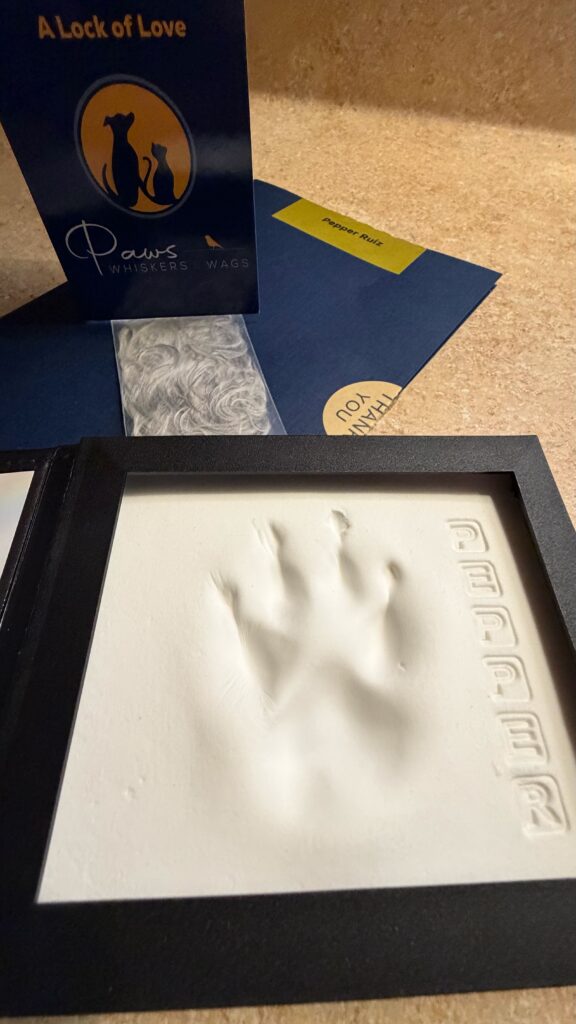
Grief and the love that remains
The grief of losing a dog is profound. It’s a loss that many people outside the dog world find difficult to understand. However, anyone who has shared their life with a dog knows that the bond is real, deep, and lasting.
Time does help soften the sharpest edges of grief. The daily ache becomes less overwhelming. The tears come less often. But the memory of a beloved dog never fades.
Pepper will always be part of my story. And like so many dogs who pass through our lives, she taught me something in her final chapter.
Sometimes the deepest expression of love is having the courage to let them go peacefully when they need us to.
Related posts

How To Train Impulse Control
In this article, Megan Gerber (professional dog trainer serving Atlanta, GA) explains how you can teach impulse control to your dog.

How To Use Your Dog’s Mealtime As A Training Opportunity
In this article, Tabor Tiffany (professional dog trainer in Rifle, CO) explains how you can use mealtimes to train your dog.

Why Zak George* Is Ruining The Dog Training Industry (*And Other ‘Influencers’)
Social media influencers and force-free absolutism continue to dominate dog training discussions – but what impact is this having in the real world?

You must be logged in to post a comment.