
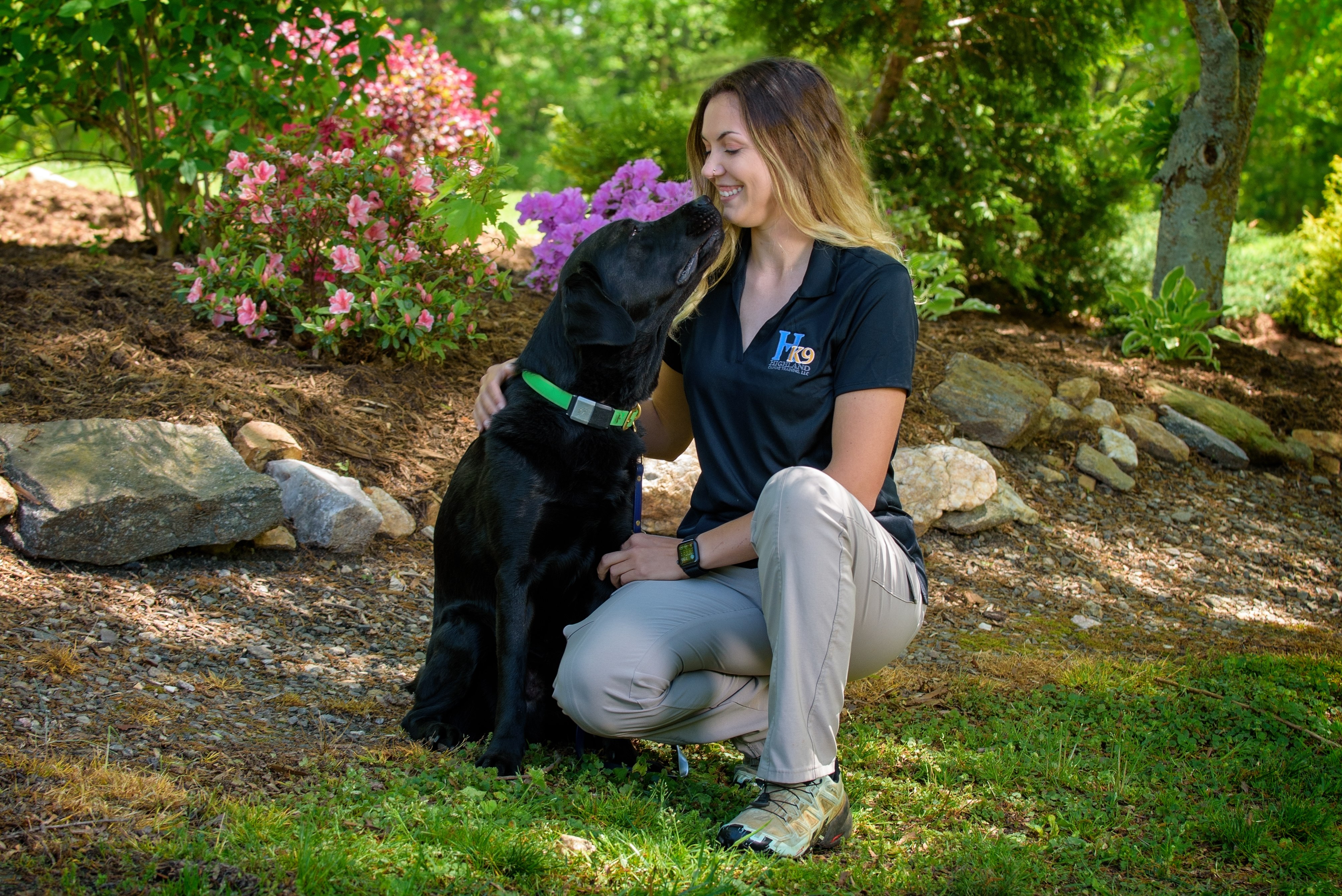
At Highland Canine Training, we are fortunate to have a talented team of professional dog trainers located across the United States. Our team works with pet dog owners across the nation to ensure they can achieve their dog training goals and build a strong human-canine relationship.
Emma Caraballo is our trainer located in Cleveland, OH. Emma has been with us for a number of years, so we wanted to share some of her background and dog training philosophy with our readers! We recently caught up with Emma for a quick Q&A session. Additionally, Emma also sits the Legislative Committee of the International Association of Canine Professionals (IACP), meaning she is well-positioned to keep on top of dog training legislation that could impact trainers – and the industry as a whole.
For more information on the services that Emma offers in Cleveland, please look at our dedicated Cleveland location page. You can also email Emma at emma@highlandcanine.com or call her at (440) 558-8490 with any questions.
Emma, can you explain about your history and background with dogs growing up?
Growing up as a military child, my brother and I always wanted a dog because several friend’s families had them. We were never really in a great position to have a dog because for several years we lived outside of the continental U.S., and moving dogs over oceans can be very difficult.
When I was in 5th grade, I volunteered at the Guam Animal Shelter walking dogs and giving baths. We almost adopted a retired racing Greyhound, but unfortunately it didn’t work out because she was already scheduled to be transferred to another rescue before we applied. My family got our first dog when I was in 6th grade. She was a Christmas present, a black and silver-grey Labradoodle we named Lucy and I was immediately in love with her. The first few months with Lucy, I struggled to bond with her because she was always picking on me and using me as a chew toy more than anyone else, so I had assumed she and I would never get along.
My parents signed Lucy and I up for a group obedience class at a pet store to help us learn to work together. I only have a few specific memories from that class. The first being that at some point Lucy and I just seemed to click, and I didn’t have any more issues being her chew toy. The other being so protective of my puppy during a group play session when another dog growled at Lucy, I got between them so Lucy and I were almost bit by a very large Malamute. The trainer prevented the dog from connecting with either of us, and that was the last training class I remember attending.
As I got older, my desire to be around dogs did not fade, so when I started college I went looking for all the clubs that volunteered with shelters. That was how I stumbled into Guiding Eyes for the Blind and puppy raising future guide dogs.
What motivated you to get into dog training?
Volunteering as a puppy raiser for Guiding Eyes really jump started my desire to learn more about dog training. My original plan going to school was to work my way towards vet school, but an intro class for psychology and teaching basic obedience and socialization to puppies shifted my end goals. I enjoyed the behavior of dogs and why they do things and how they learn, and realized I didn’t want to be a veterinarian.
I continued school and changed my focus towards canine growth and development through the Animal Science program, and started looking at how to become a dog trainer. I found an entry level position as a dog trainer through a chain pet store, and received a minimal education on how to be a dog trainer. I knew from the start that something was missing but I wasn’t sure exactly where to find what I needed. I kept looking for more education options, and that’s when I found a local trainer who listed Highland Canine’s School for Dog Trainers on his website for his education.

Can you explain what you learned in the Master Dog Trainer program at the School for Dog Trainers, and how it helped to set you up for a career as a dog trainer?
Everything! The Master Dog Trainer program gave me a deeper understanding of how dogs think and learn starting at the beginning with body language. One of the main reasons I chose to attend Highland’s school was the education on training tools and behavior modification. The limited tools I had used up until this point were not for every dog. I worked for a company that supplied no information about how to use prong collars, e-collars, chains, or bark collars, and told me I would be fired if I even discussed using these tools with a potential client but still sold them in the store. It felt hypocritical to me, and I wanted to know why they would sell something but not allow their own trainers to use it.
Learning how to use different training tools in a safe and ethical manner allowed me to know what kind of trainer I wanted to be. The Master program gave me every resource to know how to help dogs – without labeling something as bad just because it may be intimidating to use without the proper understanding. Learning how to use every tool and behavior modification were my top two goals.
Behavior modification was the second biggest interest because moving a lot growing up showed me a variety of dogs and their individual temperaments. A prominent one was a Great Pyrenees mix, Titan, that lived a few houses down when I was 17. Our street was not busy, and people weren’t supposed to cut down it to get from one side of the base to the other, but who’s going to pass up a shortcut? Titan was not known to be very sociable towards strangers and was routinely left in the backyard alone and barked at everyone as they walked by. One day, someone who didn’t live in our neighborhood was walking past, and decided that attempting to pet Titan through the fence was a good idea. Spoiler alert – it wasn’t. Titan was put down shortly after biting the stranger. At 17, I knew very little about dog behavior, but I was convinced that Titan shouldn’t have been at fault.
Wanting to be able to accurately assess a behavior problem and help that dog and family was extremely important to me. Highland gives students that opportunity to get hands on so many dogs with various temperaments that you’re prepared at the end of the program. This hands-on experience comes through working classmate’s dogs in practical exams, weekly shelter visits, the free Behavior Clinic, and handling various service dogs and working dogs in training. Without this critical piece of hands-on learning, I would not have been prepared to walk into someone’s home and help them reach their goals with their dog.
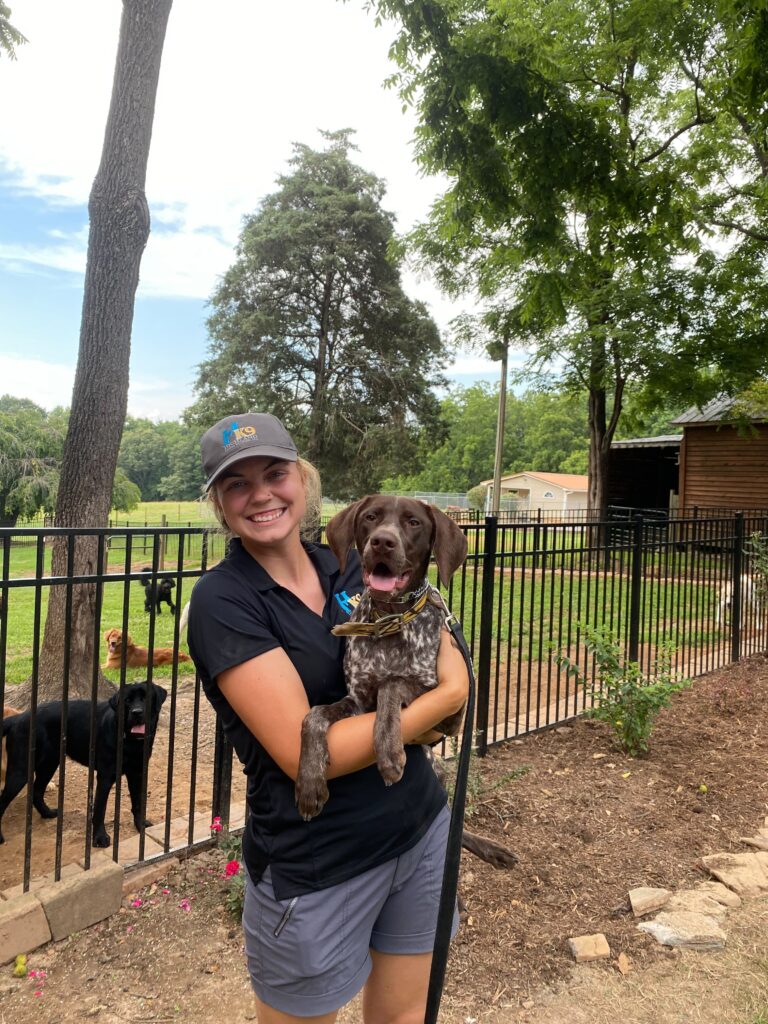
Our readers may not be aware that dog training is an unregulated industry - meaning anyone can become a dog trainer without a license or education. For you, what is the importance of education (and ongoing education) as a dog trainer?
Education is the most important resource when becoming a dog trainer. Every dog is different, physically and mentally. Because of this, one training method does not fit all. As a dog trainer striving to be the best for my clients, I never want to stop learning as much as I can to ensure I have the facts to back up my methods. Clients will always ask “why does my dog do this?”, and the reason may be a number of options and knowing how to solve that down to the root allows me as a trainer to work together with clients to make positive behavioral change. Fully understanding and utilizing the quadrants of operant conditioning, and understanding how important stress is to learn new skills and building confidence in dogs, allows me to train more. It also gives me the skills to know what dogs I am capable of helping, so I don’t take on a dog that is out of my skill set and put myself in a position to be hurt. There is a large push on social media to get dogs off euthanasia lists, but if you have no knowledge of how to safely handle a potentially dangerous dog, the result will land you and the dog in a worse situation. By continuing my education through books and lectures from other trainers, I give myself more resources to help the next dog I come across.
Could you explain your overall dog training philosophy?
My overall training philosophy would be balanced training focusing on LIMA and relationship building methods. In as many cases as I can, positive reinforcement is the go-to for teaching new behaviors with the other three operant conditioning quadrants available as needed. Every dog is different so discussing with clients first about where their dog is struggling and which method would best help them to communicate expectations is a priority so that everyone is on the same page. No matter if I am using positive reinforcement or positive punishment, there needs to be a good relationship between myself and the dog. If there is no trust in one direction or another, no method is going to have the desired impact.
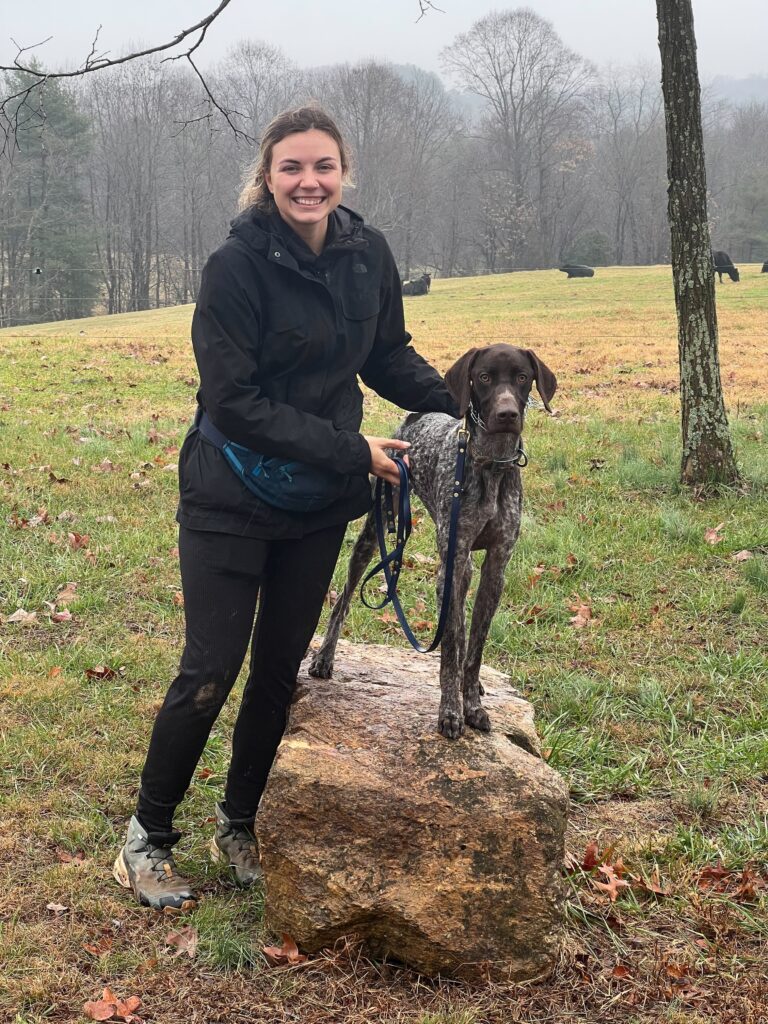
You are a member of the IACP's Legislative Committee. What does this role entail and how does your role (and the IACP's influence) help to shape dog training legislation?
As a member of the IACP’s Legislative Committee I track legislation that impacts canine professionals through a handful of states. This means I am looking for anything that mentions making changes that impact trainers, groomers, or breeders. Once that has been identified, a letter supporting, opposing, or asking for changes to proposed legislation is drafted. The IACP focuses on positive change in the canine professional communities that allow for all ethical and responsible professionals to continue unimpeded.
When specifically talking about dog training legislation, we draft letters to oppose bills that look to ban specific training tools or methods. The goal of shaping dog training legislation is to allow educated and ethical trainers continue to train dogs in the way that works best for each individual dog, not creating a one-size-fits-some mold that would result in an increase of dogs in shelters or behavioral euthanasia.

Which dog training programs do you offer to dog owners in Cleveland?
Year round I offer private lessons and board & train packages for basic and advanced obedience and behavior modification. In the spring, summer and fall I offer group classes for beginner, intermediate and advanced training.
What can dog owners expect when working with you?
When working with me, dog owners can expect any concerns to be heard, and a plan created to reach their goals in realistic expectations. From the beginning evaluation, I like to have open discussion about training methods and tools so that the owners can see every option available to them. I am always available to my clients between lessons to answer questions as they come up and always include owners in any changes to the training plan as training progresses.
Most importantly, dog owners can expect me to care about them and their dog. Making sure that the owner is 100% on board to reaching their goals lets us make those reality!
Related posts

How To Train Impulse Control
In this article, Megan Gerber (professional dog trainer serving Atlanta, GA) explains how you can teach impulse control to your dog.

How To Use Your Dog’s Mealtime As A Training Opportunity
In this article, Tabor Tiffany (professional dog trainer in Rifle, CO) explains how you can use mealtimes to train your dog.

Why Zak George* Is Ruining The Dog Training Industry (*And Other ‘Influencers’)
Social media influencers and force-free absolutism continue to dominate dog training discussions – but what impact is this having in the real world?

You must be logged in to post a comment.