

My favorite advice when training with new clients is that your emotions flow right through the leash to your dog.
Dogs are sensitive to human emotions and consistency, meaning that the owner’s mindset while training is critical to ensuring clear communication and positive results. Remaining calm with clear expectations from the owner allows the dog to feel safe, understand the expectations set for them, and meet the goals of each training session.
Dogs rely on physical body language as their primary form of communication with each other and with people, which allows them to be in tune with even the most subtle physical changes in emotion from their owners. The dog’s sense of smell is also significantly stronger than a human’s, allowing them to detect the chemical changes that occur with mood changes in the body. A successful training session has an owner with a calm, clear and consistent mindset.
How dogs react to our body language
Have you ever had a bad day and felt like everything you try to do just isn’t quite right? When it comes to training with your dog, that is probably true. Dogs are always watching our body language and feeding off what we communicate to them, even if we don’t realize it.
The best way to think about this is in terms of leash pressure from the owner to the dog when walking. First, think about walking in an open and relaxing environment for you and your dog. You may notice that you relax your hold on the leash and your dog will walk in a nice loose leash manner; you are clearly communicating to your dog that you’re comfortable here and there are no reasons to be stressed.
Now, think about walking down a city street next to the road. Do you reel the leash in and wrap it around your wrist reducing the length? Do your shoulders tense up as your movements with your dog become jerkier? These changes that you might not even notice in your physical actions are feeding directly to your dog which may cause your dog to become stiffer and jerkier in their own movements, which results in signs of stress such as barking, pulling, or lunging when they wouldn’t in the more relaxing environment.
These changes in your dog’s behavior are directly related with the changes to your own behavior. When you add tension to the leash because you are uncomfortable or you are anticipating a stressful event, that pressure creates tension in your dog to anticipate that they need to react to the environment. Controlling our physical language to indicate a positive mindset is only the beginning – we also have to control our emotions as well to reduce the chemical signals that can influence training sessions.
How dogs understand our emotions
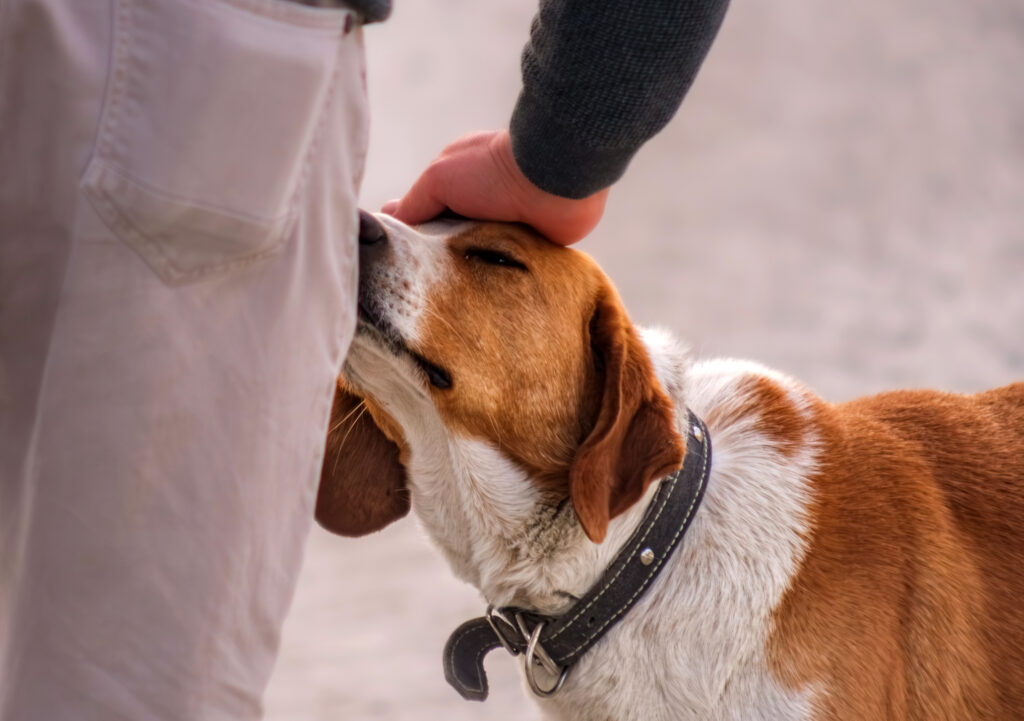
Dogs can easily recognize human emotions such as stress, fear, and happiness by using their nose. These chemical changes will always betray us, even if we can master the physical cues that give us away. A good mindset includes being mentally and physically prepared for working together with your dog.
If you’ve never been introduced to the phrase, “manifest the things you want to happen,” you have been now. When you keep a positive mindset going into a training session you will see more frequent positive changes in your dog’s behavior at the end of each session. This also works in the opposite way. If you go into a training session thinking the dog either won’t meet your expectations or it will end poorly, you shouldn’t be surprised when you see zero change or even slight regression because you have a negative mindset when you start. Instead of acknowledging the progress your dog is making, you’re only focusing on where they aren’t quite there yet, which negatively impacts your desire to work with your dog and your dog’s desire to work with you.
If you’re not in the right space to train your dog, it’s okay to take a break. It’s okay to focus on skills that you and your dog are comfortable with to minimize the stress you’re feeling and sending to your dog.
The mindset you need for successful training outcomes
A mindset that is calm and clear in expectations is the best to go into any training scenario with. Whether you’re working obedience in the home or in dog-friendly public spaces, this mindset should always be present when working with your dog. There are going to be instances where we are truly surprised by something, like another dog barking at you seemingly from nowhere, but if you have a background of remaining calm then you can easily maneuver the situation for the best results to keep you and your dog safe and turn it into a training opportunity. Your dog will always be in tune with you and respond accordingly, which is why keeping a good mindset as much as possible is important.
Related posts

How To Use Your Dog’s Mealtime As A Training Opportunity
In this article, Tabor Tiffany (professional dog trainer in Rifle, CO) explains how you can use mealtimes to train your dog.

Why Zak George* Is Ruining The Dog Training Industry (*And Other ‘Influencers’)
Social media influencers and force-free absolutism continue to dominate dog training discussions – but what impact is this having in the real world?

How To Train Dogs With Specific Fears
In this article, Corey Archer looks at how to approach training a dog who has a specific fear.

You must be logged in to post a comment.