
You probably know by now that dogs are very instinctive creatures. They tend to react to noises, smells and other things in their environment. Generalizing these reactions in a variety of different settings is imperative for building a well-rounded, well-behaved dog – and a key component of that is building impulse control. In this article, we’ll discuss some methods you can utilize for improving your dog’s impulse control.
What is impulse control?
A lack of impulse control is the thing many people reach out to us about – without knowing the name of the issue. It is the puppy or dog that bolts out the door, jumps for attention, or dives into their food bowl before you put it down. Essentially, impulse control is the dog’s ability to resist their urge for a certain behavior. Most dogs aren’t born with impulse control, which is why this is one of the behaviors we must teach and reinforce.
Ways to teach impulse control
There are a few everyday scenarios where you can work on your dog’s impulse control.
Mealtimes
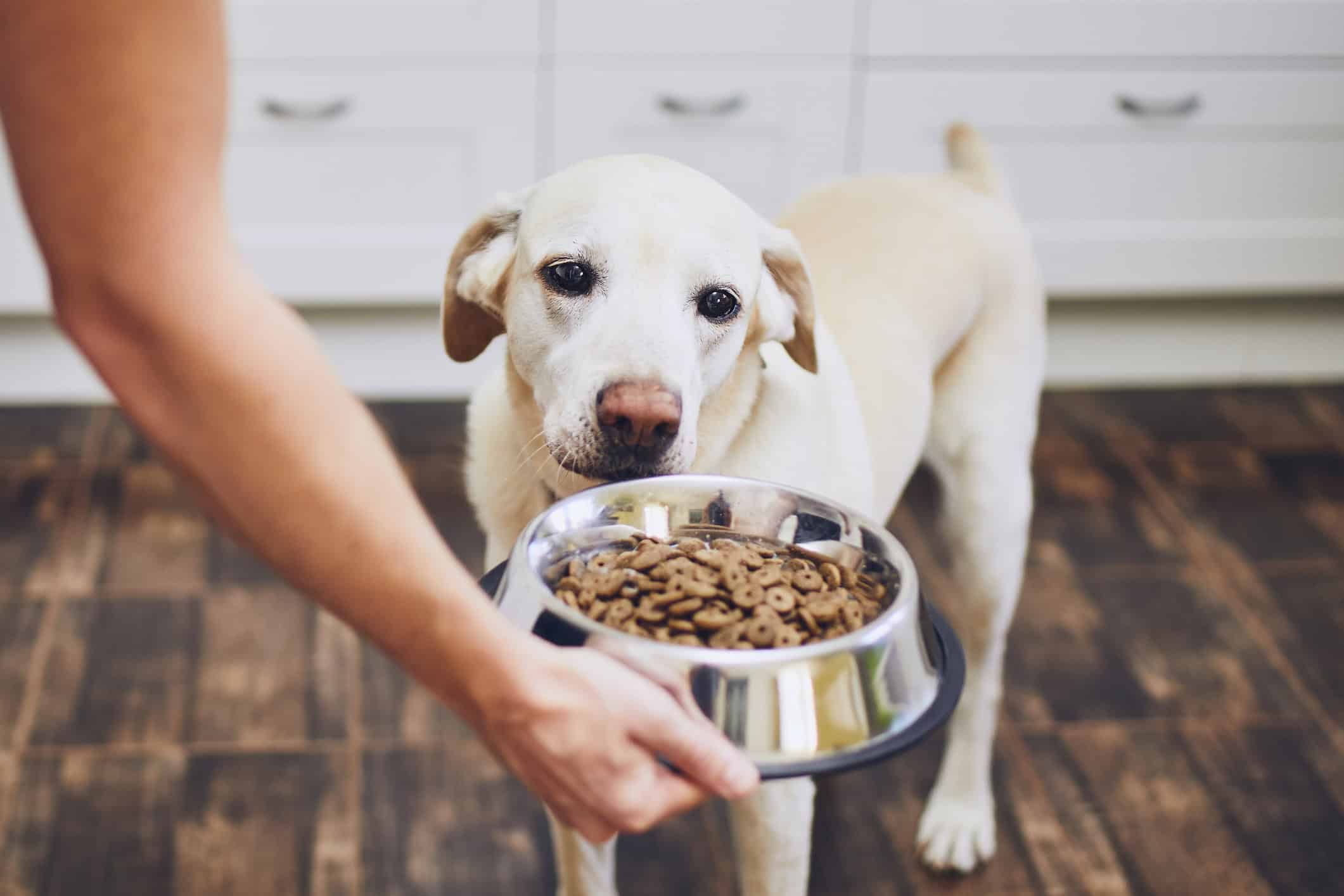
One of my favorite ways to start teaching impulse control is during feeding time. The goal is to be able to set the bowl down without interference from the dog. We’ve all seen that puppy or dog that dives into their food before you’ve had a chance to put their bowl down, and they’re just doing what comes natural to them – going for their food.
To start, you’ll want to do this in a quiet area and away from any other people or pets. Start to lower their food bowl (with their food in it) and gently pull the bowl back up as soon as they show their impatience (nose going for the bowl, or barking or pawing at it). Then start lowering it again and repeat pulling it back up if they go for it. After doing this a few times, most dogs catch on quickly and won’t go for their food. Once you’re able to get the bowl down without them interfering with it, they get to eat!
The next time you feed them, repeat the process starting from the beginning. Most likely, they won’t dive in for their food as many times and the process will go quicker. This can be taken a step further to where the dog waits to be told they can eat. I like to get to the point where the dog will make eye contact with me and then I will use the command word, “OK”. In this scenario, this tells them they are now able to eat.
As they progress with controlling their impulse, increase the difficulty and try the same exercise when there is someone or another pet around. Life doesn’t happen in a bubble, so you’ll need to work through some of the common distractions they will encounter in your household. At this point, you will want to lower your expectations since there is now a distraction present. Starting from the beginning, repeat the process you did earlier, but now in the presence of the distraction. Bring your patience and trust the process. Over time, they will learn to wait for their food even with distractions. This is because they have learned that going after their food makes it go away and staying back is what gets them their food.
Doorways
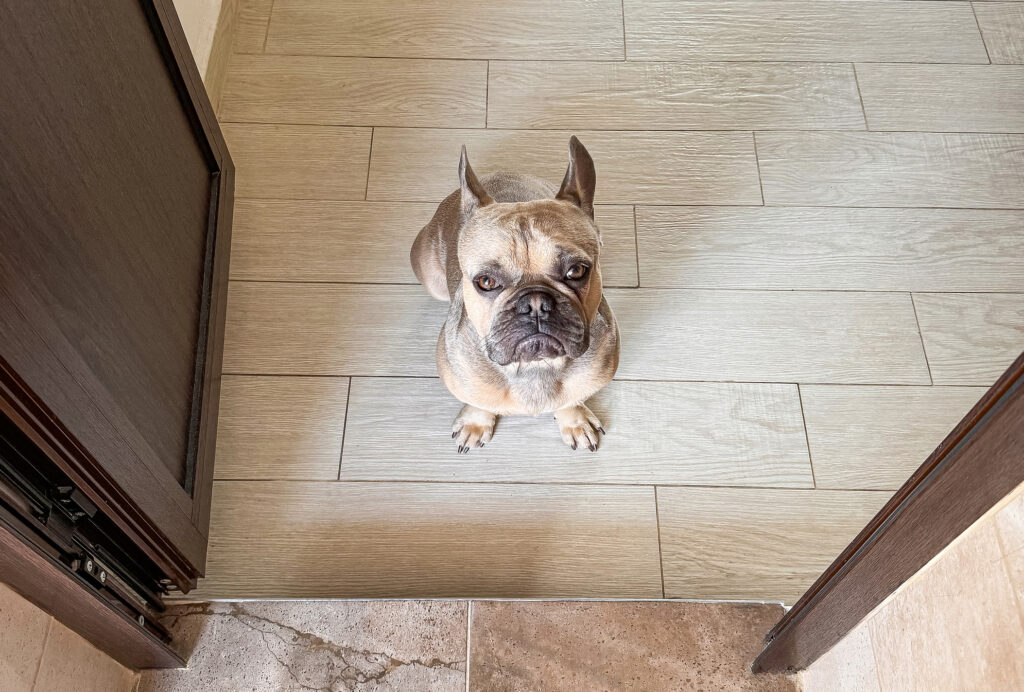
If your dog has a good Sit where they will hold it (or sit-stay), this can be used for doorways. Practicing this scenario can help to eliminate door dashing, a common fear and complaint of dog owners. By putting your dog into a Sit before opening the door, they will need to be released before they can go through it.
It is always best to start this indoors in a controlled environment, as opposed to using the front door where your dog could escape. This may be your end goal, but safety must always come first. Have the door closed and tell your dog to sit (and stay if you use it) and slowly open the door. If they start to get up, carefully close the door. Once they sit down again, try opening the door again. You may need to start by only opening the door an inch and work up to opening the door all the way.
As your dog gets reliable with the instruction, increase the amount you open the door. Eventually, you’ll open it all the way. The key here is for your dog to not get up until you tell them it’s okay. Once they’ve mastered internal doors, try the back door if you have a fenced in yard. Since you’re increasing the difficulty, you will again need to scale back your expectation. Here you will step through the exercise the same way you did with an internal doorway. When you get to the front door, it’s always advisable to have a leash on your dog as a safety net. The last thing you want is to find out your dog wasn’t ready for the increased challenge and have your dog dart out the door.
In conclusion
These are just two examples of ways to teach impulse control. There are many other ways to work on this including: Coming out of their crate, receiving attention, toys, exiting the car, meeting people. As their owner who is around them every day, you will likely know the specific scenarios where your dog has a lack of impulse control. If you’re still struggling, working with a professional dog trainer can help to improve the process and the outcome.
Investing some time on impulse control training will help make sure your days run smoothly – and both you and your dog will be happier!
Related posts

How To Use Your Dog’s Mealtime As A Training Opportunity
In this article, Tabor Tiffany (professional dog trainer in Rifle, CO) explains how you can use mealtimes to train your dog.

Why Zak George* Is Ruining The Dog Training Industry (*And Other ‘Influencers’)
Social media influencers and force-free absolutism continue to dominate dog training discussions – but what impact is this having in the real world?

How To Train Dogs With Specific Fears
In this article, Corey Archer looks at how to approach training a dog who has a specific fear.

You must be logged in to post a comment.