

In this article, I would like to talk about the process of training dogs with specific fears. During my years of working with behavioral issues with dogs, the most common issue that I see is some type of fear-based problem.
As with any behavior modification case, there are several steps that we take in order to figure out what the root cause of the behavior is. It is imperative that we diagnose the problem correctly before attempting to modify the behavior. Misdiagnoses could have some very harsh outcomes for the dog, the owner, and anyone that comes into contact with the dog.
I generally follow these basic steps when attempting to diagnose a behavior issue:
- Speak with the owner and ask them very specific questions that may help with the diagnosis. These questions can be numerous.
- Observe the dog. I try to do this in-person, but if that is not possible, recorded videos can be helpful. While observing the dog, I am looking for body language that could give me a sign of the root cause of the problem.
- Once I have decided on a root cause, I formulate a plan to modify the behavior.
- Then, I put that plan into action.
Finding out the root cause of the fear
With fearful dogs, we must identify exactly what the dog is scared of. This process can be challenging. In my experience, I feel that some trainers shortcut and generalize this process.
I am going to use the fear of men as my first example. If the client states that their dog is scared of men, then we must test theories to determine if the dog is actually scared of all men. It may turn out that the dog is only scared of tall men, or short men, or men with beards, or just white men, or just men wearing hats, or men that have a deep voice tone. All of these could be possible specific fears that the dog is experiencing.
Another example could be a dog that is fearful of storms. In this case, we must determine what part of the storm is causing the fearful behavior. Is it the rain? Thunder? Lightning? Barometric pressure? All of these components of the storm could be the specific reason that the dog is scared.
So how do we determine what the dog is specifically scared of? We have to begin testing theories. One by one, we have to begin exposing the dog to the things that we believe are causing the problem. Going back to the dog that is scared of men, we have to expose them to every possible variation of men until we can determine the exact variable that causes the dog to react in a fearful manner. For example, we may find that the dog is only scared of tall white men that have facial hair and are wearing a hat. Very specific, right?
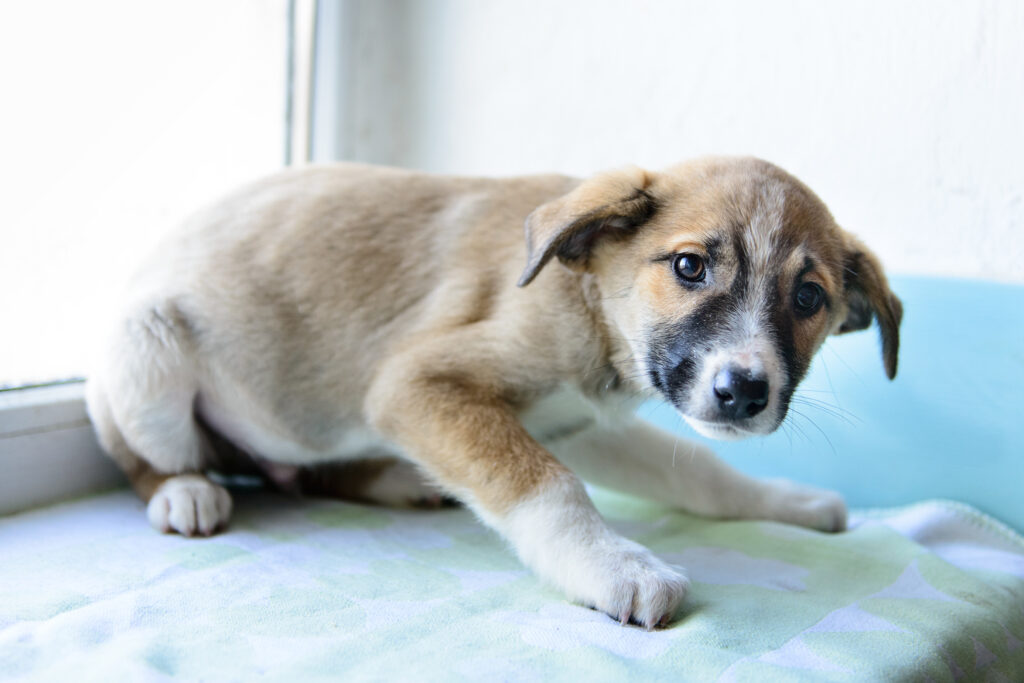
How to resolve the dog’s fear
Once we have finally figured out the root cause of the problem, then we have to find a way to shift the dog’s thinking. We must remember that these dogs literally believe that they are in danger of physical harm when they encounter whatever the cause may be. It is our job to change their perception of the outcome from something negative to something positive.
First, we must find a high value reward for the dog. This reward could be food, a specific toy, affection, or a variety of other things. So, now we must take the time to find the perfect positive motivator of this specific dog. If we are lucky, we can use food or treats.
Once we have determined what motivator we are going to use, then we can begin working on thresholds. By ‘thresholds’, I mean beginning to expose the dog to the specific thing that is scared of at a low rate of stimulation. For example, if the dog is scared of the man that I described earlier, we would expose the dog to that type of person at a distance that does not cause any behavior change. Using the motivator to distract the dog and change its perception of the outcome, we would shorten that distance in very small increments. During this process, we need to be very careful not to overstimulate the dog.
The same thing can be done with sounds and noises. Using the storm example, we can record a storm or use the sound from an artificially created source to slowly expose the dog to the sound at a very low volume. By using our motivator, we can use that to change the dog’s perception of the outcome and increase the volume in very small increments.
Once the dog is feeling comfortable when exposed to the specific item or noise, then we must begin changing the context. By this, I mean changing the environment, location, and distractions. This is an important part of the training. It is our responsibility as a trainer to ensure that the dog is confident in all environments and that the owners are well educated in how to handle the dog in different situations.
In conclusion
I tell all of the students that attend the Southeast Campus at the School for Dog Trainers that fear-related behavior problems are the most common issue that they will face. Also, that it is the easiest to fix – but not always the fastest. So, patience and persistence are key when facing these types of issues.
Related posts

How To Train Impulse Control
In this article, Megan Gerber (professional dog trainer serving Atlanta, GA) explains how you can teach impulse control to your dog.

How To Use Your Dog’s Mealtime As A Training Opportunity
In this article, Tabor Tiffany (professional dog trainer in Rifle, CO) explains how you can use mealtimes to train your dog.

Why Zak George* Is Ruining The Dog Training Industry (*And Other ‘Influencers’)
Social media influencers and force-free absolutism continue to dominate dog training discussions – but what impact is this having in the real world?

You must be logged in to post a comment.