
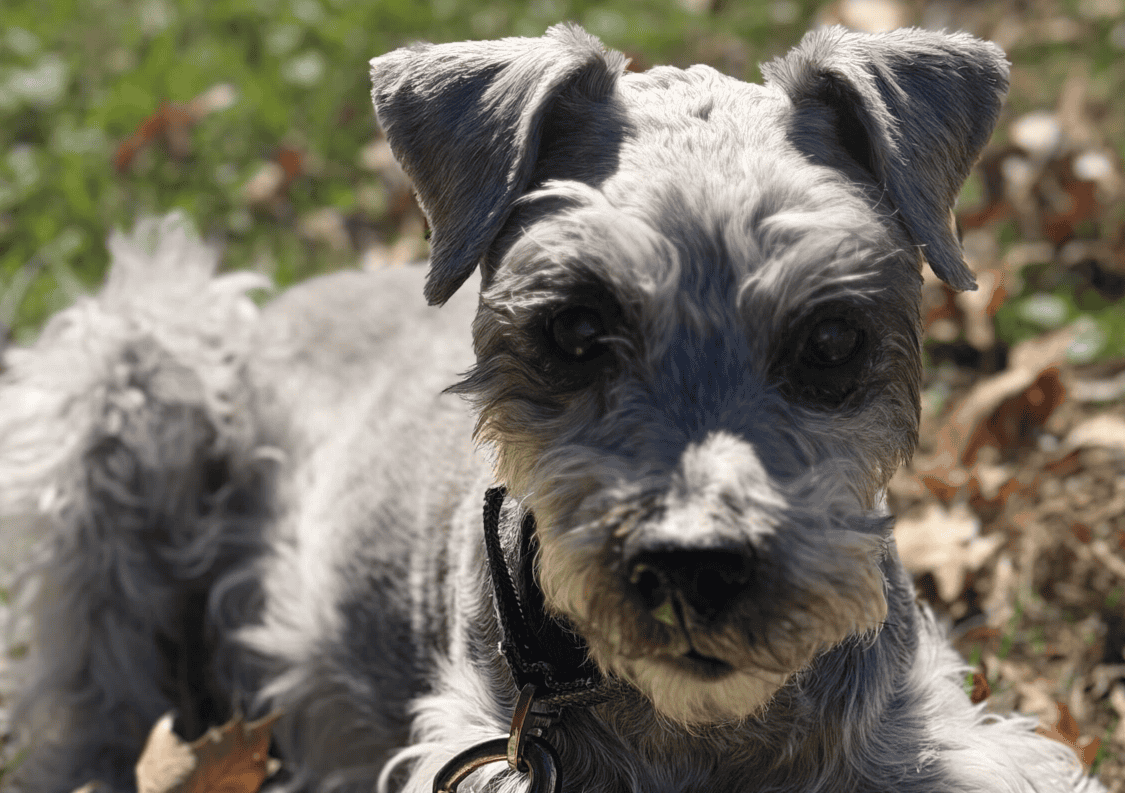
Living with a blind dog is not a story of limitation—it’s a story of adaptation, trust, and the incredible resilience of our canine companions. Whether a dog is born without sight or loses vision gradually because of age or illness, their ability to rise to the challenge is extraordinary. And as trainers and caregivers, we have the privilege of helping them navigate their world safely and confidently.
In this article, we’ll explore the key differences between working with a congenitally blind dog versus one who loses sight later in life, and how thoughtful training—grounded in clear structure, motivation, and thoughtful management—can help any blind dog thrive. I’ll also share the journey of Pepper, my own dog who slowly lost her vision due to diabetes.
Dogs don’t rely on sight the way we do
One of the biggest misconceptions people have is that sight is a dog’s primary sense. For humans, vision dominates how we interpret the world. But for dogs, smell is king—followed closely by hearing.
This is why blind dogs often adapt far better than we expect:
- Their noses function like radar, constantly mapping their environment.
- Their ears pick up subtle cues, including our tone, footsteps, or the direction of other animals.
- Their tactile awareness increases, helping them navigate familiar paths with impressive precision.
Because of this, blindness is not the life-stopping disability it might be for a person. With guidance and training, blind dogs can be confident, joyful, and independent.
Training a dog born blind
Dogs born blind have the advantage of never relying on eyesight, so there is no loss to compensate for—only skills to build.
Key characteristics of congenital blindness:
- They naturally develop heightened sensory awareness early.
- Their mental map of the world is built around consistency in routine and environment.
- They are often less anxious about movement because they’ve never known vision.
Training focus for congenitally blind dogs:
- Clear verbal communication
Words and tone become the dog’s primary cues. Marker training (using a clear “yes” or clicker sound) works beautifully when introduced thoughtfully. - Spatial confidence-building
Gentle, structured leash work, exploration on different surfaces, and controlled exposure help them develop balance and confidence. - Touch cues
Simple tactile signals—like a shoulder tap for “stop” or a chest touch for “sit”—can serve as an additional communication system. A vibration-only collar can also be a valuable tool, providing a gentle, consistent cue that’s easy for a blind dog to recognize. When conditioned properly, the vibration acts as a clear signal to get their attention or guide them, making it an effective complement to hands-on touch cues. - Safe environmental setup
Because they don’t know visual danger, management tools like baby gates, textured mats, or defined pathways are especially helpful.
Congenitally blind dogs often become astonishingly agile because they never experience fear associated with losing vision—they simply learn the world differently.
Training a dog who goes blind over time
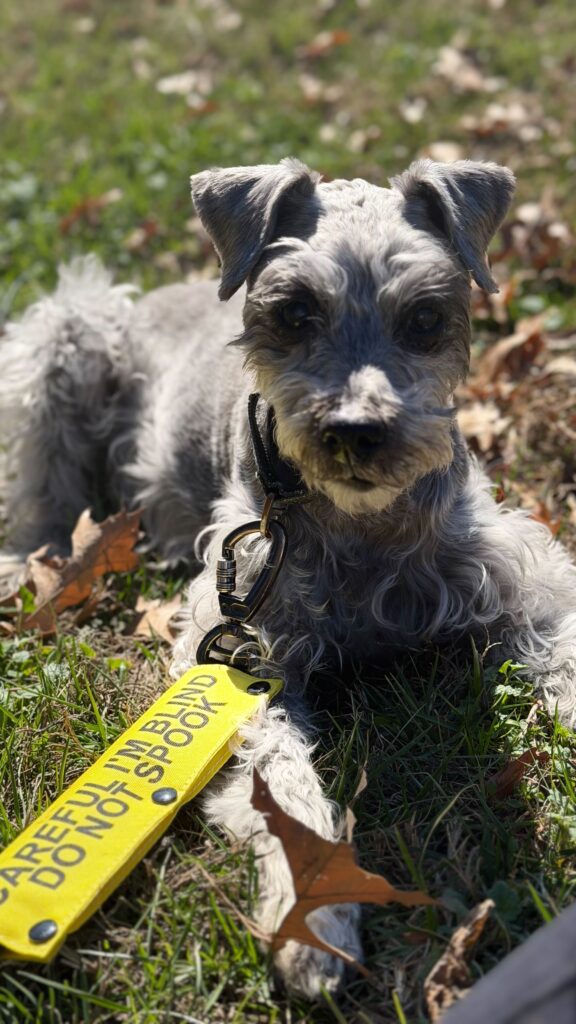
My Standard Schnauzer, Pepper, is a perfect example of this journey. When she was diagnosed with diabetes, her vision began to fade gradually. At first, she bumped into things. She hesitated on familiar paths. She paused before jumping onto her favorite spot on the couch. There is an emotional component to this type of blindness—not just for the dog, but for the people who love them.
Pepper’s adaptation journey
As Pepper’s vision diminished, she began leaning more heavily on her other senses, which were already working overtime:
- She tracked my footsteps instead of my gestures.
- She relied on my voice to orient herself.
- Her nose—always strong—became her compass.
How I helped her using light
Although 100% blind, Pepper retains a small amount of light perception, which adds another useful layer to her training and daily routine. I take advantage of this by placing soft lights near key locations like her crate, food and water bowls, and the stairway. The glow creates subtle contrast she’s able to detect, making it easier for her to orient herself without stress. For dogs with partial vision, these small lighting cues can provide meaningful guidance—especially when combined with scent markers, verbal cues, and structured support.
She showed me firsthand how capable dogs are when we give them the right tools.
Key characteristics of acquired blindness
- Dogs may experience confusion or insecurity.
- Their old habits—based on sight—must be replaced with new ones.
- Consistency becomes deeply reassuring.
Training focus for dogs losing vision
- Rebuilding confidence
Structured leash work, predictable routines, and supportive boundaries give dogs a clear framework for moving safely. - Re-teaching known behaviors using sound and touch
A dog like Pepper may know “sit,” but no longer see the hand signal. Adding verbal or tactile cues helps bridge the gap. - Orientation exercises
Teaching cues like “step up,” “step down,” “careful,” “left,” “right,” or “follow” empowers the dog to move more securely. - Thoughtful environmental management
Rather than rearranging the house, keeping familiar pathways stable allows the dog to rely on memory and scent trails.
With time and guidance, dogs who lose their sight often regain confidence and independence. Pepper certainly did.
How dogs’ other senses step in
Blind dogs rely on:
Smell
Their sense of smell is estimated to be tens of thousands of times stronger than ours. They use it to:
- Identify locations
- Track family members
- Detect changes in terrain
- Recognize objects and obstacles
Adding scent markers—like a drop of essential oil on a doorway or mat—can make navigation even easier.
Hearing
Dogs hear higher frequencies, subtle vibrations, and directional cues remarkably well. This allows them to:
- Track your movement
- Locate entrances or rooms
- Detect approaching people or animals
- Respond to verbal instructions quickly
Sound becomes their “map,” especially in open spaces.
Touch & proprioception
Paws feel textures. Whiskers detect airflow. Collars and leashes give feedback. All of this helps a blind dog orient their body in space.
Training tools that help any blind dog thrive
- Verbal markers and cues for clarity
- Tactile signals to support communication
- Scent markers to designate important locations
- Structured leash guidance to build confidence
- Consistent routines to reinforce mental maps
- Safety management (gates, mats, stairs blocked as needed)
Additional tools - the halo harness
Many blind dogs benefit from a halo harness—a lightweight device with a circular bumper that sits around the dog’s head and shoulders. When the dog approaches an unfamiliar object or wall, the halo makes gentle contact first, giving them a chance to stop or reroute before they bump into anything. It’s an excellent tool for dogs who are navigating new environments or who become nervous in unpredictable spaces. While Pepper adapted beautifully in her familiar areas, she still found the halo helpful in places she didn’t know well.
In conclusion
Blind dogs are not fragile. They are adaptable, courageous, and remarkably intuitive. With patience, consistency, and meaningful guidance, they can live full, active, joyful lives.
Balanced training principles—clear expectations, calm leadership, thoughtful reinforcement, and appropriate boundaries—provide reassurance and structure for blind dogs, helping them feel safe and successful.
Pepper is a testament to that. Watching her navigate the world with confidence—using her nose, ears, and trust in our relationship—reminds me that dogs don’t need perfect eyesight to live perfectly happy lives.
They simply need our partnership.

You must be logged in to post a comment.