
When it comes to training your dog, you should start by identifying your end goal. What is it that you want to accomplish? Holding a sit while you leave the room? A solid heel command? Polite greetings? Once you have identified the goal, you can come up with a training plan. A training plan is key to your success.
Factors that influence your dog’s training
You will want to set both you and your dog up for success by setting realistic and specific goals. To achieve this, you will want to consider a variety of factors, including:
Age
A young puppy will have a shorter attention span than an adult dog. The length of your training sessions will need to take this into account. An older dog may have a longer attention span but have physical impairments that may necessitate more frequent breaks.
Temperament
Some dogs learn quicker while others need more time and repetition. High energy dogs may need to keep moving or they get bored and check out. An anxious dog may need more coaxing and reassurance.
Breed
A herding dog with high prey drive will probably struggle more around small animals. A bully breed may move slower and appear more stubborn. Working dogs benefit from structure and need regular mental stimulation to channel their energy.
Appropriate motivation
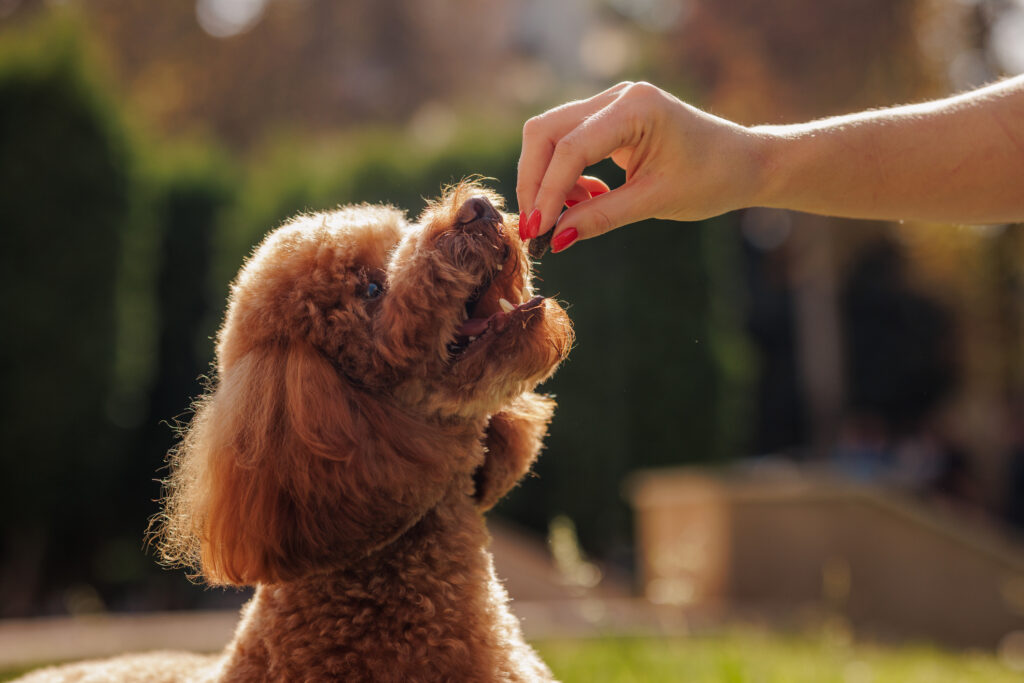
You will need to be prepared to reward your dog throughout the process. Is your dog food motivated? Not all dogs are so you may need to plan on lavish praise, using a favorite toy or even playtime as a reward. If they are food motivated, do you have a high enough value treat for the task at hand? Starting out you will want to use as much positive reinforcement as possible.
Previous training
Has the dog had any formal training? What commands does the dog already know? Can you build off an established behavior or are you starting from ground zero? What type of training has worked best in the past? Or what was ineffective that you’ll want to avoid?
You
How much time do you have to commit to training? Do you have the knowledge necessary to train? And make sure you have any training tools you will need to work through process from beginning to end.
Break goals into small steps
Next, it helps to break a goal down a larger goal into baby steps. If you solely focus on the end result, you will miss seeing your progress.
Take teaching your dog to sit and hold it while you go into another room. You can break that goal down into smaller pieces:
- Teach sit by luring them into position.
- Add the command and release word.
- Fade out the treat so that the dog knows the verbal cue.
- Begin backing up one step before releasing the dog.
- Back up 2 to 3 steps before coming back and releasing the dog.
- Incrementally back further away from your dog.
- Leave the room but pop right back in.
- Leave the room for increasingly more time.
As you can see, this one command was broken down into 8 baby steps. Each step is getting you closer to your desired behavior. This outline does not even include adding distractions to your training. Each time you add a distraction or increase the difficulty you will want to lower your expectations until the dog has successfully completed it. Start with the easiest distraction for the dog and work up to the greater challenge. And here you will want to slowly increase the difficulty in small increments.
By breaking training down to bite size pieces, we reduce the risk of frustration on both sides of the leash. This will help keep you motivated and training to be a positive experience. We want training to strengthen the bond between you and your dog!
Additional tips
Keep a training log. Tracking your progress can help keep you and your dog motivated throughout the process. I have found that most clients struggle to see their progress. It gives me the opportunity to remind them where they started and show them how far they have come. Just like you, they can be focused on the result and can miss the baby steps. By tracking your progress, it makes it easier to stay engaged as you work towards your goal.
Have a plan but be flexible. Some sessions will go better than others. And do not be afraid to cut a session short if you or the dog is having an off day. The relationship with your dog is far more important than racing toward a goal they are not ready for.
In conclusion, establish your goal, assess your dog, break the goal into small steps, and track your progress. Most importantly, have fun and enjoy the process.
Related posts

Why Zak George* Is Ruining The Dog Training Industry (*And Other ‘Influencers’)
Social media influencers and force-free absolutism continue to dominate dog training discussions – but what impact is this having in the real world?

How To Train Dogs With Specific Fears
In this article, Corey Archer looks at how to approach training a dog who has a specific fear.

All About Crate Training
In this article, Shae Slabaugh (professional dog trainer in Huntsville, AL) explains how to crate train your dog.

You must be logged in to post a comment.