
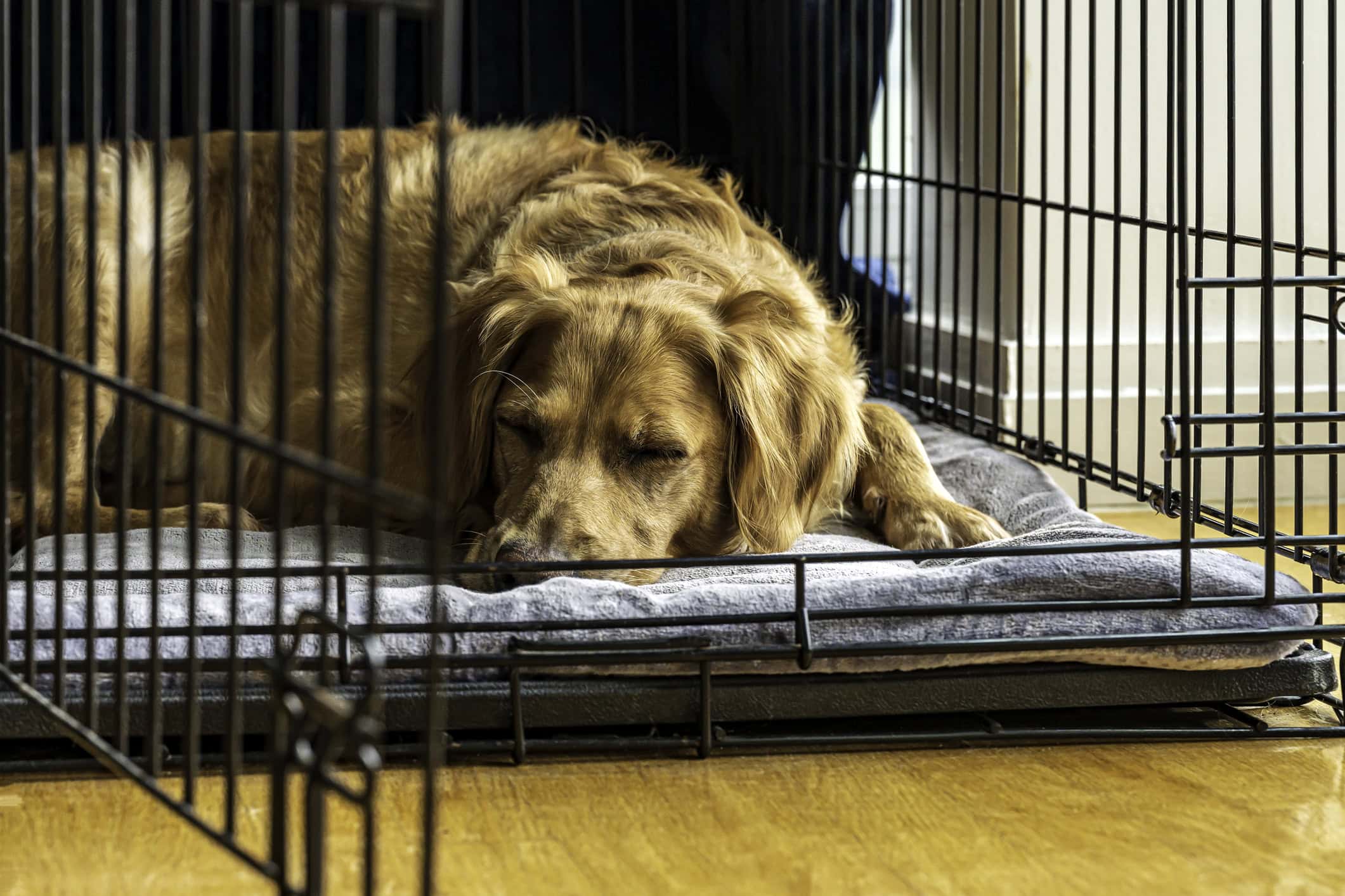
Have you ever been frustrated because your dog is chewing everything up or having accidents in your house?
When you contact a professional dog trainer, they may tell you to put your dog in a crate – but when you get the crate, your dog hates it and they bark endlessly. Maybe you started with a crate for your new dog but made it a punishment tool? Did you rescue a dog that was in a crate its whole life until you came along to give them a new life?
This article is for people in any of these scenarios. Crate training can be one of the most important things you can do for a dog – as long as you do it properly.
Choosing the correct crate - and making it positive for your dog
Let’s first talk about what kind of crate is right for you. They make all several different styles, colors, and sizes.
You don’t have to go out and buy the most expensive crates on the market, but if your dog becomes Houdini, you may have to go in that direction. With puppies, crate size matters as this plays a role in potty training. If the crate is too big, they will have accidents in their crates. Wire crates can be good for this scenario since they come with a divider and you can increase the space as they get bigger. Air crates are more confined and create a cave-like feel, which is very beneficial for your dog. If your dog breaks out of everything, an impact crate may be your only option. However, regardless of the crate you choose, they should be used in the same manner when it comes to training.
This brings us to our next point of what the crate should represent to your dog. The crate should be a safe place for your dog. Think of the crate as the equivalent of a room for you. If you get stressed or overstimulated, and you go to another room and breathe, you feel better. A dog can do the same with their crate. This is especially important for all dogs so that they always have a safe place.
What the crate should not represent is punishment or you leaving the home. It’s okay for your dog to be in their crate while you are present, and it’s a very important part of training. One of the most important things to remember with crate training is it will take time and patience.
Now that you have the right crate and know what it should represent, we are going to walk through the crate training steps.
Step 1: Getting your dog to like the crate
Set up the crate in a space where you spend time and get some tasty treats ready. If your dog doesn’t like food, try a toy instead. Toss the food or toy in the crate and allow your dog to go inside without closing the door. This is where your dog will start to have a positive association with the crate. If your dog already has a negative association with the crate, this may take more repetitions. Once your dog is comfortable going into the crate without hesitation, you can move onto the next step.
Step 2: Teaching them the command
Now teach your dog a command to go into your crate. Choose a word like crate, house, or kennel. When you toss a toy or treat in the crate, you can begin to say the command as they walk into it. Continue to do this and test saying the command without throwing a treat in. If they get in, give them a treat once they are in the crate. If not, continue to pair the command with the treat.
Step 3: Start closing the crate door
Now that your dog knows the command and is happy to go in, you will need to begin closing the crate door. To begin this part of the process, you will start with just closing the door for a few seconds and then opening it to let them out. Gradually extend the time the door is closed. Initially begin closing the door and staying close, but once they are doing well, start to create distance. The most important thing about this is if they are barking, whining, or pawing at the crate, to not let them out or move in their direction. This will only reinforce undesirable behavior and make it more difficult to break them of the behaviors later.
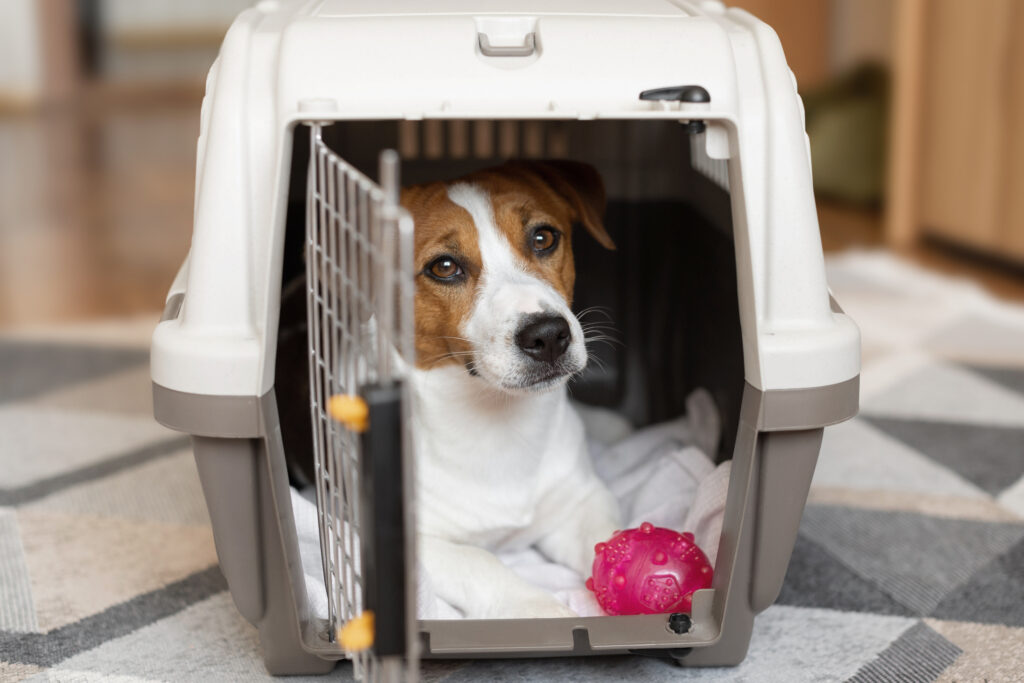
Step 4: Leaving your dog alone while they are in the crate
Once you have built them up to not barking while you are present, you will need to get them used to behaving the same way while you are not present. For this, you will have them go in the crate and close the door and walk out of the room for just a second – then, come right back and let them out. Repeat this, but slowly go out of sight for longer each time. This is typically when they start to freak out but remember not to let them out until they calm down, and once you do let them out, do not make a big deal out of it. Try going outside as well and coming right back inside. If you just have to make a quick trip out somewhere, put them in the crate – just try to avoid being gone for extended periods of time at the beginning.
Step 5: Teaching them a crate threshold
One thing that is very helpful is a threshold so they don’t bolt out of the crate as soon as it’s opened. When doing this, you want to start by putting them on a leash just for some extra control.
You will have your dog in the crate and close the door, but don’t latch it – just hold the door closed and then slowly open it. If your dog tries to bolt out, just close the door back until they relax and try again. It may take several tries before you are able to open the door all the way, so just be patient. Once you open the door all the way, you can release them by touching their head and saying okay, or saying “break” and tossing a treat out of the crate so they know they can come out. If the door is open and they come out without you releasing them, just take them right back to the crate. By doing this you are teaching them that breaking without permission just gets them right back to where they started. You can give your dog treats while in the crate with the door open, teaching them that good things happen in the crate.
Helpful tips for extended time in the crate
Now that you have all the basics down, continue to increase your time and distractions.
Something that will help your dog feel more comfortable in the crate is feeding them in there. This will make your dog excited to go in their crate, particularly if they love their food. It will also give your rescue pups a safe place to feel comfortable eating.
Once your dog is more comfortable in the crate, you can give them some toys or lick mats. You can pick up toys almost anywhere (such as KONGs) that you can spread peanut butter or pumpkin on, and then toss in the freezer for even longer periods of mental stimulation while your dog is in the crate. A very helpful thing to do is to leave the door open so your dog can always go in if they want to, not just when you need them to.
Although this is a simple breakdown and concept, crate training can be challenging. It is very important to not force your dog throughout this process. Your dog may be great, or it may go very slowly. If you have only used the crate for punishment, it will take much longer because you will have to completely flip your dog’s perspective. For puppies, it drops the potential of separation anxiety considerably. There are so many positives that can come with proper crate training that can be game changing for you and your dog!
Related posts

How To Use Your Dog’s Mealtime As A Training Opportunity
In this article, Tabor Tiffany (professional dog trainer in Rifle, CO) explains how you can use mealtimes to train your dog.

Why Zak George* Is Ruining The Dog Training Industry (*And Other ‘Influencers’)
Social media influencers and force-free absolutism continue to dominate dog training discussions – but what impact is this having in the real world?

How To Train Dogs With Specific Fears
In this article, Corey Archer looks at how to approach training a dog who has a specific fear.

You must be logged in to post a comment.